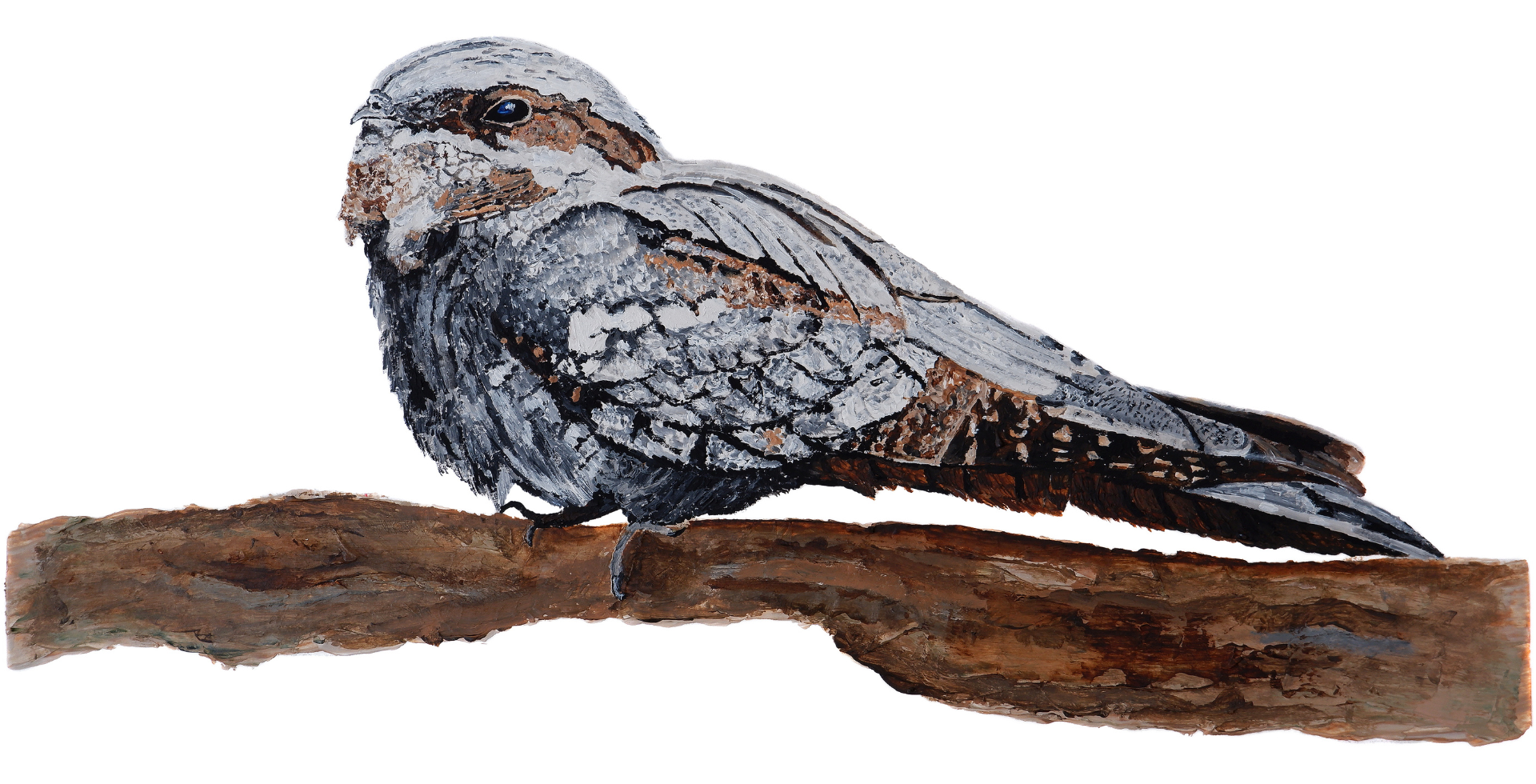
Nightjar

What is a Nightjar?

The nightjar is a bird and a traditional heathland species.ย It arrives in Englandย in April and May from itโ€™s wintering grounds in Africaย andย nests on the ground on heathland and in young coniferย plantations.ย It is difficult to see because it is nocturnalย and cryptically camouflaged in greys and browns,ย soย isย best seen at duskย when itย appearsย falcon-like in silhouetteย against the night sky. However,ย it isย most easily identified by the churring song andโ€ฏthe odd claps of wings which the male nightjar makes as he displays to attract nearby females.

Why is the Nightjar important to the Surrey Hills?

The nightjarย is protected by the Wildlife and Countryside Actย (1981)ย and its UK conservation status is Amber.ย ย Southern England holds internationally important numbers of this species and Surrey holds 4% of the national population. Habitat loss has led to significant overall declines in some areas though the range is generally expanding now as a result of conservation initiatives and the maturation and harvesting of post-war conifer plantations.

Nightjar by Mark Crisp

Image with thanks to Mark Crisp, Warden at RSPB Farnham Heath

What habitat does the Nightjarย like?

Heathland

Lowland heathland isย a habitat of outstanding importanceย for itsย range of nationally and internationally rare or endangeredย species.ย Theseย ancient, open landscapesย areย generally found on poor, acid, sandy soils less than 300 metres above sea level.ย They areย characterised byย dwarf shrubs of the heather family.

What can be done to benefit the Nightjar?

Good heathland management for this speciesย will create/result inย a mosaic of heathland habitats which should includeย a good proportion of mature heather with small gapsย for nesting, scattered trees for song-posts and insect-rich feeding areas such as areas of wet heath. Disturbance from humans and dogs should be minimised.ย This will benefit a wide range of otherย heathlandย speciesย such as Dartford warbler, stonechat,ย grayling, reptiles and the large moths and beetles on which the nightjar feeds.

Opportunities to create/improve/extend suitable habitat for this species include:
  • Grazing by hardy livestock breeds to control scrub and dominant grasses
  • Regenerating heather by controlled burning, cutting or turf strippingย but retaining 10 โ€“ 20% mature heather
  • Clearing scrub and controlling its regrowth
  • Selective thinning of trees includingย matureย conifer plantations
  • Managing drainageย toย conserveย areasย of wet heath
  • Managing fire risk
  • Managing disturbance, especially during the breeding season

Mechanised bracken control should be avoided where nightjars might be nesting.


Creating and managing areas for the Nightjar will help deliver the following benefits to communities:
  • Clean water
  • Clean air
  • Protection from and mitigation of environmental hazards
  • Mitigation of and adaptation to climate change
  • Thriving plants and wildlife
  • Beauty, heritage and engagement

These illustrations are by an artist taking part in a programme delivered by Watts Gallery Trust and funded by the Michael Varah Memorial Fund. This series of 30 Surrey Hills Indicator Species were commissioned by Surrey Hills Society and funded by Surrey Hills Trust Fund as part of the Making Space for Nature Exhibition.