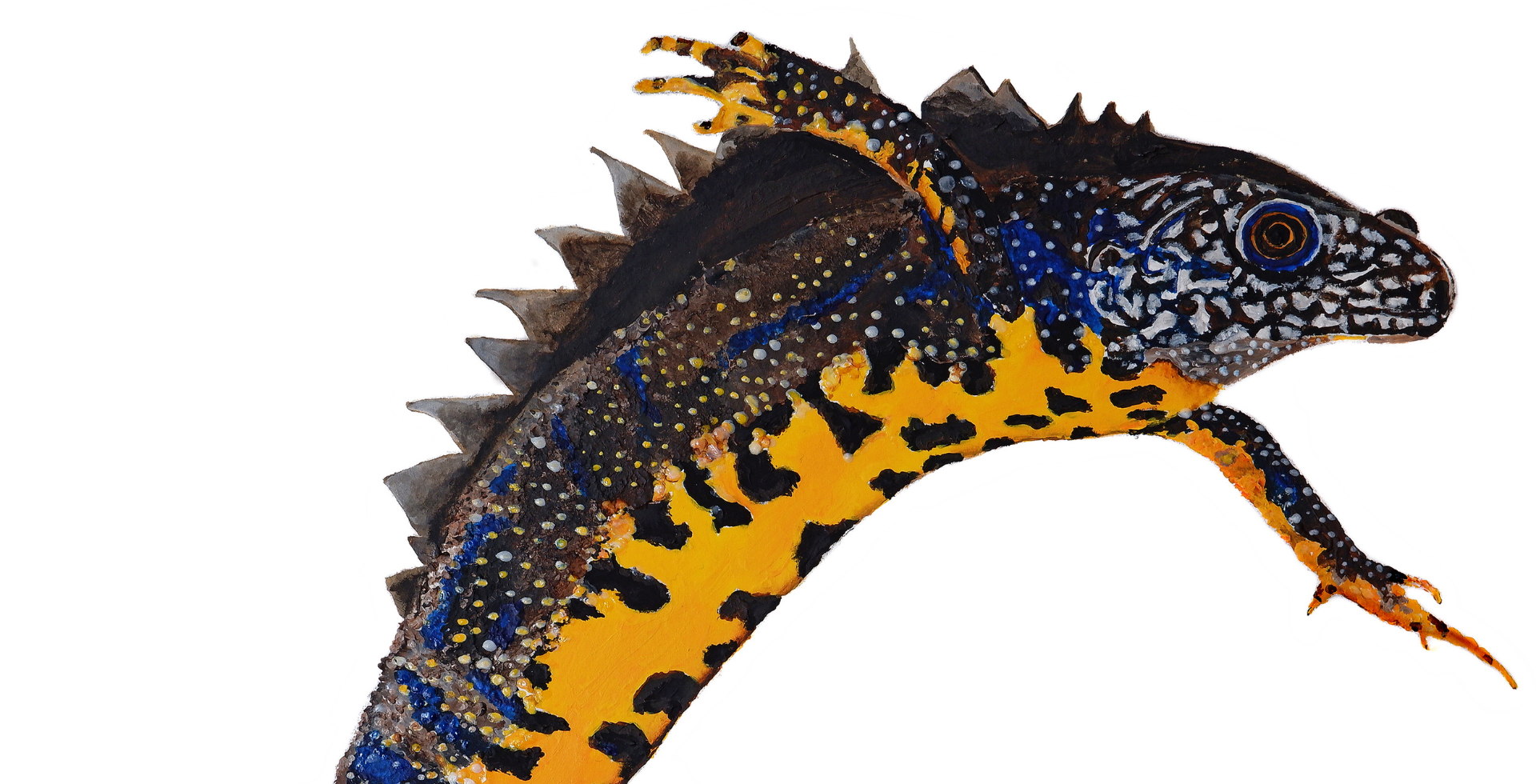
Great-crested newt

What is aย Great-crested newt?

Maleย great crested newts can quickly be distinguished from other newts byย theย distinctlyย jagged crestย thatโ€™sย most prominent onย itsย backย and with a gap at the base of its tail (the smooth newt has a wavyย and continuous crest along its back and tail.)ย Theyโ€™reย also known asย the Wartyย Newt due to the texture of their skinย and areย our largest species of newt reaching a maximum adult length of 170mmย with females tendingย to be larger thanย theย males.

Why is theย Great-crested newtย important to the Surrey Hills?

The condition ofย great crested newtย habitatย and successful breedingย is threatened by:

  • Poor water quality
  • Lackย or lossย of shallow water habitatย in ponds and lakes
  • The introduction or presence of fishย in breeding ponds
  • Transitionย of smaller ponds toย drierย woody/marshy/fenย habitats due to lack of management
  • Lack ofย appropriateย hibernation sitesย within range of their breeding site
  • Change of land useย between breeding and hibernation sites
  • Population fragmentationย due to habitat loss

What habitat does theย Great-crested newtย like?

Water

Water is theย dominantย component of many ofย our most diverse and valuable habitats.ย ย The running water of rivers, streamsย andย ditches; staticย water bodies in natural lakes and ponds, ephemeralย features such as winterbournesย andย dew ponds,ย manmadeย reservoirsย andย restored gravel pitsย with canals having the appearance of manmade rivers but more characteristic of a still water body.ย Water is also vitalย in terrestrial habitats such as marsh, fen, bog,ย reedbedsย andย carrย woodland,ย where its presenceย is a permanent requirement.ย  ย In Surreyย itโ€™sย estimated thatย water as habitat (both aquatic and wetland habitats) occupyย 3,516 hectaresย or 2.1% ofย the countyโ€™sย land area.ย ย  The list ofย bird, mammal, insect, amphibian,ย fishย and plantย species that rely onย wetland and aquatic habitats is immense.

Newts leave the ponds during the summer, moving into terrestrial habitat to feed on invertebrates such as earthworms and insects. They go into hibernation around Octoberย butย will remain active until night-time temperatures drop below 5ยฐC.ย They hibernate, often under logs and stones andย usually within about 200m of theirย breeding siteย although it is thought some have travelled up to 1,000 metres.ย Over-wintering sites for newts are sheltered, damp, cool and frost-free such asย underground cracks and crevices, rotting tree stumpsย and rock or log piles.

What can be done to benefit the Great-crested newt?

Good managementย and habitat creationย opportunitiesย forย great crested newtsย consists of:
  • Maintainingย good water qualityย inย existingย ponds
  • Creating new pondsย inย appropriate areas (subject to any consents required)
  • If no shallow waterย areas are present,ย the reprofiling of existing ponds alongย theย more open,ย south-facingย banksย (subject to survey of existing species)
  • Managing existing ponds to maintain open water andย open southerly aspect
  • Takingย careย whenย considering woodland management nearย toย knownย great crested newt breeding sites.


Creating and managing areas for the Great-crested newt will help deliver the following benefits to communities:
  • Clean water
  • Clean air
  • Protection from and mitigation of environmental hazards
  • Mitigation of and adaptation to climate change
  • Thriving plants and wildlife
  • Beauty, heritage and engagement

These illustrations are by an artist taking part in a programme delivered by Watts Gallery Trust and funded by the Michael Varah Memorial Fund. This series of 30 Surrey Hills Indicator Species were commissioned by Surrey Hills Society and funded by Surrey Hills Trust Fund as part of the Making Space for Nature Exhibition.