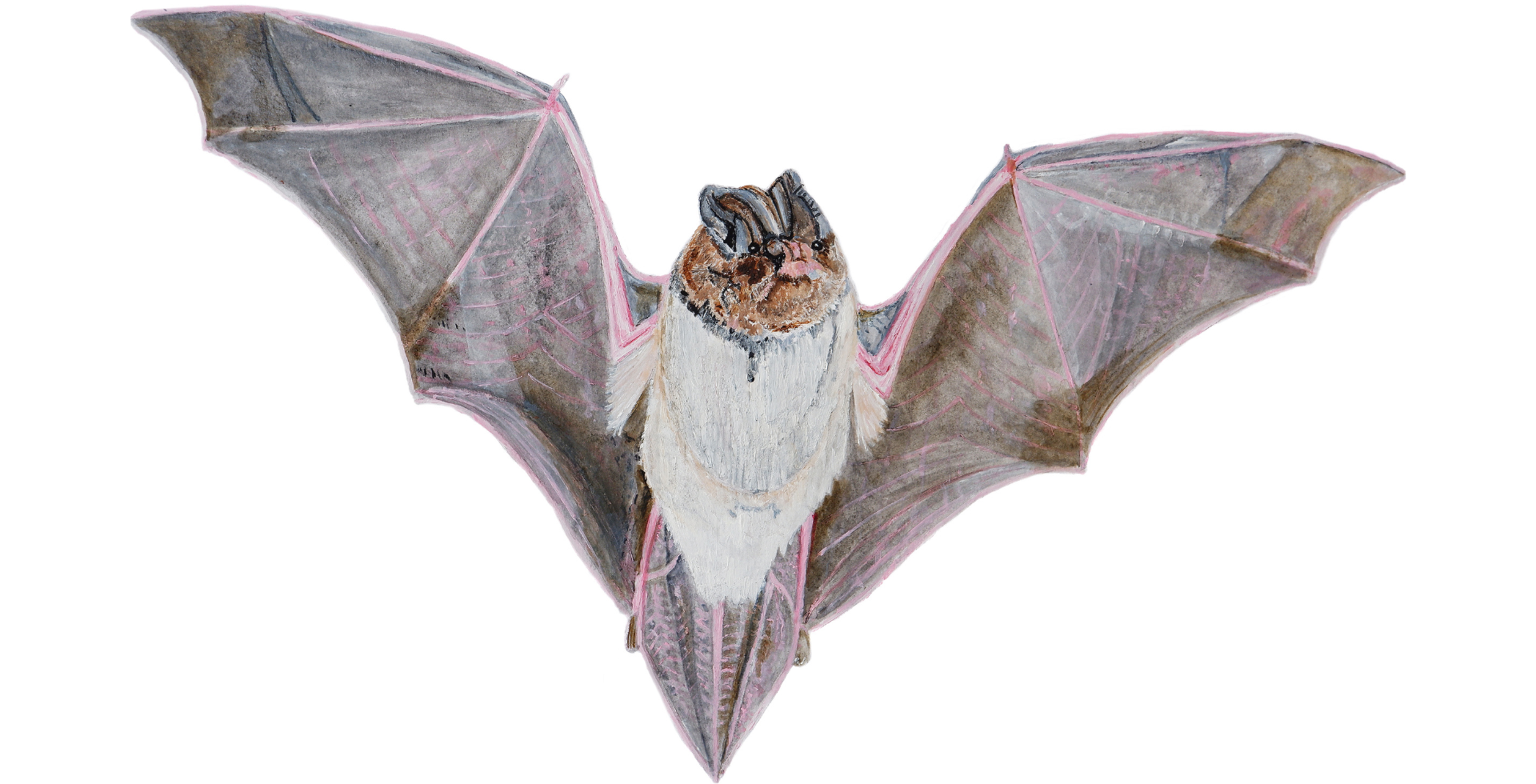
These illustrations are by an artist taking part in a programme delivered by Watts Gallery Trust and funded by the Michael Varah Memorial Fund. This series of 30 Surrey Hills Indicator Species were commissioned by Surrey Hills Society and funded by Surrey Hills Trust Fund as part of the Making Space for Nature Exhibition.
Barbastelle Bat
What is a Barbastelle bat?
The barbastelleย is one of the UKโs rarest mammals.ย Itย has long, silky fur that is blackish-brown in colour with white tips. Rounded ears meet on the forehead, and a short, upturned nose gives it a pug-like appearance.ย Itย roostsย in crevices in woodland treesย andย foragesย at night on midges and other flying insects on wet floodplain grasslands.ย Barbastellesย are fast and agile fliers and travel < 6km to their feeding grounds along flight corridors such as hedgerows and wooded streams.
Why is the Barbastelle bat important to the Surrey Hills?
Like allย UK bats, the barbastelle isย protected underย UK law throughย the Wildlife and Countryside Act, 1981 andย is a European Protected Species, protectedย through theย European Habitats Directive. Itย isย patchilyย distributed across southernย and centralย England andย southernย Wales.ย ย It is threatened by loss of roost sitesย through inappropriateย woodlandย management,ย drainage of wet woodlandsย and loss ofย landscape connectivity between itsย woodlandย roosts andย foraging sites.
Goodย woodlandย managementย forย the barbastelleย willย create/result inย woodland with a good age structure including mature and over-mature treesย to provide potential roost sites, a well-developed understorey to maintain humidity, areas of wet woodland and good landscape connectivity.
What habitat does the Barbastelle bat like?
Woodland.
Woodlandย is important because it is one of our most complex habitats and as such, can support more wildlife than almost any other UK habitat. Ancient woodland which has been continuously wooded since at least 1600 AD is particularly important, but younger secondary woodlands and even conifer plantations can be important for nature if managed sympathetically.
What can be done to benefit the Barbastelle bat?
Woodland which is well-managed for barbastelles also providesย habitat opportunities for other woodland bats,ย woodpeckers,ย deadwood invertebrates and many species of flying insect.
Opportunities to create/improve/extend suitable habitat forย this speciesย include:
- Thinning toย encourage the development ofย theย woodland shrub layer
- Managing veteran trees
- Creating and managing rides and glades
- Managing drainageย toย conserveย damp woodland areas
- Controlling deer
- Planting new hedgerowsย to improve landscape connectivity
- Extending the hedge management cycle to allow hedges to grow taller and wider.