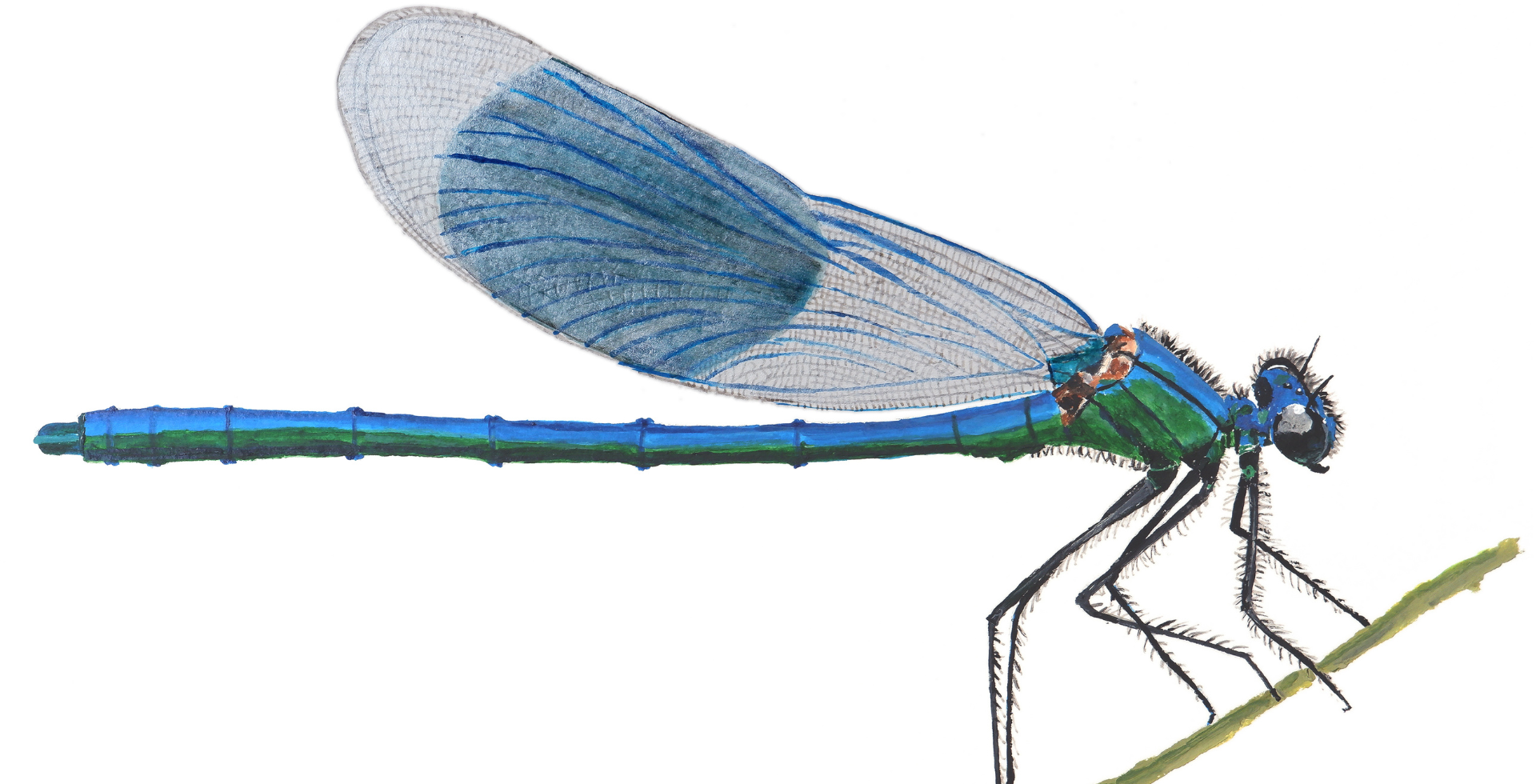

Dragonflies / Damselflies

What areย Dragonflies/damselflies?

There are thought to be 36 species of dragonfly in the UKย with all having varying habitat requirements.ย Cleanย andย shallow watersย withย abundant water plantsย are the most basic requirements for most species of dragonflyย and these can beย part of a lake, pond,ย river,ย stream, ditch or canalย although none are likely to be found in faster moving waters.

Their life cycles all consist of an egg, larvaย (or nymph)ย and adult stage althoughย the length of time spent in each stage canย alsoย vary greatly between species.ย Eggs can be laid inย plant material, rotten wood, mud, in stream beds or deposited directly into the water.ย Dragonflies spend most of their lives in their larval stageย and can moult up to 14 times beforeย theyโ€™reย fully grown.ย ย All theย British dragonflies develop in water and depending on the species, the larval stage canย last from two months to more than five yearsย in the case of theย Golden-ringed Dragonfly.

Why are Dragonflies / damselflies important to the Surrey Hills?

The condition ofย dragonflyย habitat and successful breeding is threatened by:

  • Poor water quality.
  • Removal ofย banksideย andย aquaticย vegetation
  • Access by livestock damagingย bankside and aquatic vegetation
  • Invasiveย plantย speciesย dominating aquatic vegetation.

What habitat doย Dragonflies/damselfliesย like?

Water

Water is theย dominantย component of many ofย our most diverse and valuable habitats.ย ย The running water of rivers, streamsย andย ditches; staticย water bodies in natural lakes and ponds, ephemeralย features such as winterbournesย andย dew ponds,ย manmadeย reservoirsย andย restored gravel pitsย with canals having the appearance of manmade rivers but more characteristic of a still water body.ย Water is also vitalย in terrestrial habitats such as marsh, fen, bog,ย reedbedsย andย carrย woodland,ย where its presenceย is a permanent requirement.ย  ย In Surreyย itโ€™sย estimated thatย water as habitat (both aquatic and wetland habitats) occupyย 3,516 hectaresย or 2.1% ofย the countyโ€™sย land area.ย ย  The list ofย bird, mammal, insect, amphibian,ย fishย and plantย species that rely onย wetland and aquatic habitats is immense.

What can be done to benefitย Dragonflies/damselflies?

Good management and habitat creation opportunities for the dragonflies would include:
  • Allowing bankside vegetationย to developย along rivers, streams, ponds,ย lakesย and ditches
  • Rotational cutting ofย bankside vegetationย in small sectionsย and over aย longย timeย spanย if possible
  • Designingย new pondsย with dragonflies in mindย andย donโ€™tย introduce fish orย domestic waterfowl
  • Takingย all necessary steps to avoid the introduction of invasive plant species
Creating and managing areas for Dragonflies/damselflies will help deliver the following benefits to communities:
  • Clean water
  • Clean air
  • Protection from and mitigation of environmental hazards
  • Mitigation of and adaptation to climate change
  • Thriving plants and wildlife
  • Beauty, heritage and engagement

These illustrations are by an artist taking part in a programme delivered by Watts Gallery Trust and funded by the Michael Varah Memorial Fund. This series of 30 Surrey Hills Indicator Species were commissioned by Surrey Hills Society and funded by Surrey Hills Trust Fund as part of the Making Space for Nature Exhibition.