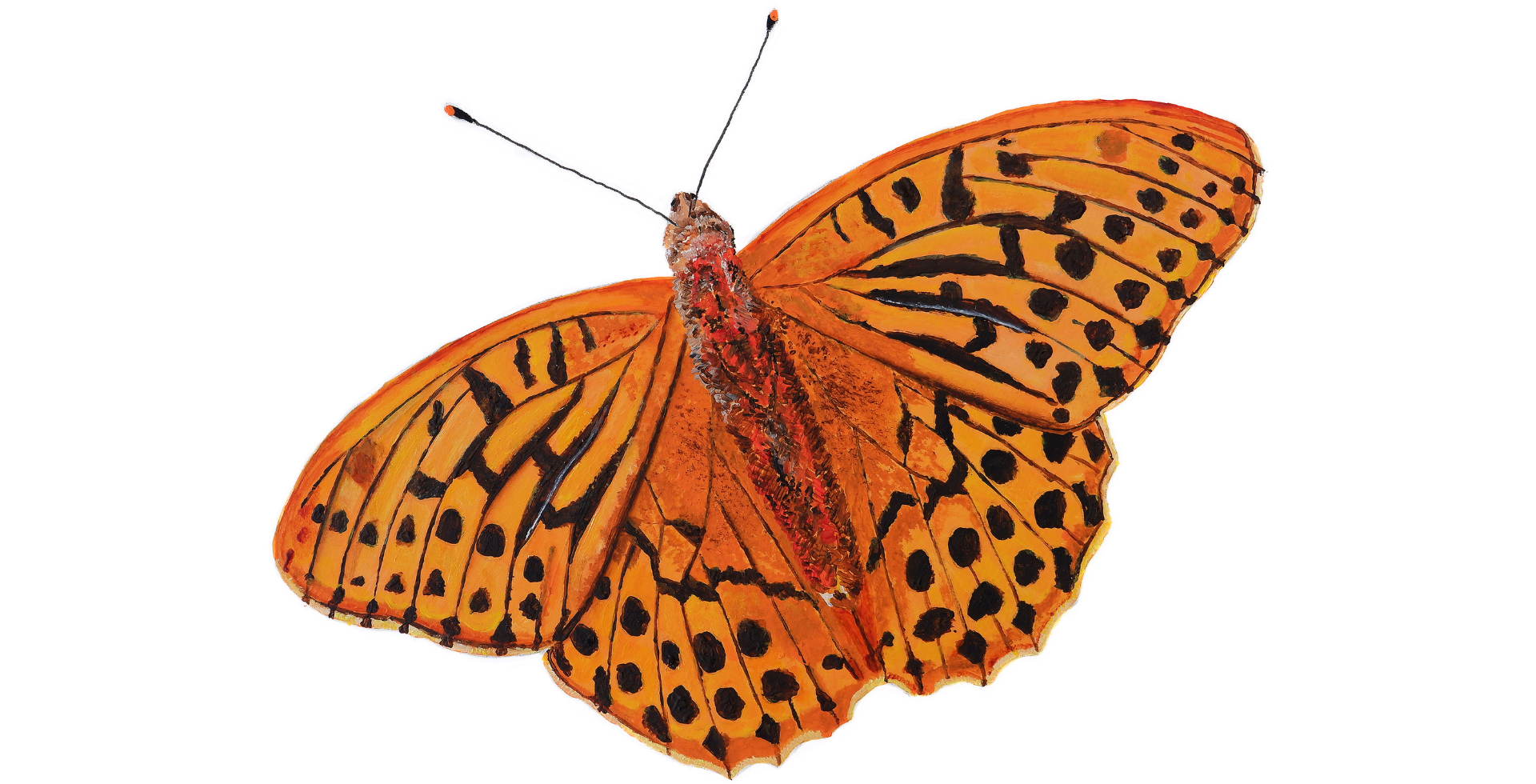
These illustrations are by an artist taking part in a programme delivered by Watts Gallery Trust and funded by the Michael Varah Memorial Fund. This series of 30 Surrey Hills Indicator Species were commissioned by Surrey Hills Society and funded by Surrey Hills Trust Fund as part of the Making Space for Nature Exhibition.
Silver-washed Fritillary
What is a Silver-washed fritillary?
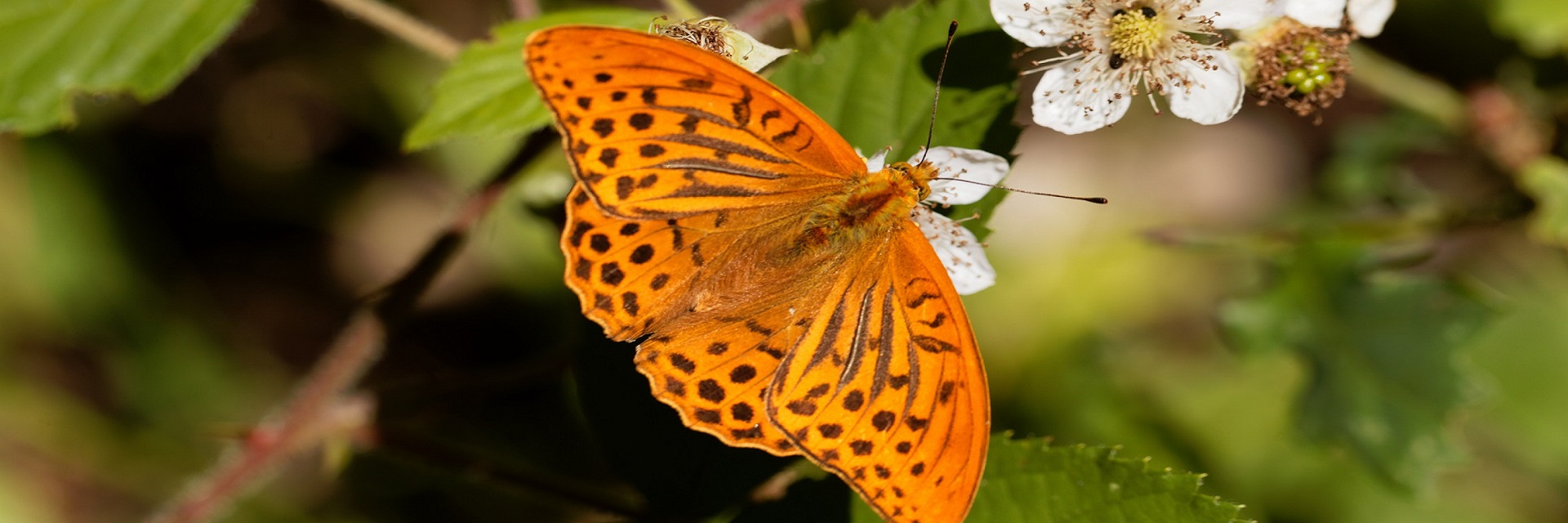
The silver-washed fritillary is a characteristic species ofย well-managedย openย woodlands in high summer.ย It is aย large, gracefulย orangeย butterflyย with an intricate pattern of black spots and lines on theย upperwings. The underside of the rear wing is washed lime-green and pink, with silvery streaks running across it.ย The male has four broad, black stripes across the forewings. In southern England, a small proportion of females have wings that are bronze-green, known as the formย valezina.ย The adult butterfliesย fly from late June to early September,ย feedingย on flowers such as bramble.
Why is the Silver-washed fritillary important to the Surrey Hills?
The silver-washed fritillary is a low conservation priority.ย It is found acrossย southern England and Wales and throughout Ireland.ย It declined during the twentieth century but in recent decades has become more widespreadย with a range expansion ofย 56% since the 1970s.
What habitat does the Silver-washed fritillary like?
Woodland.
Woodlandย is important because it is one of our most complex habitats and as such, can support more wildlife than almost any other UK habitat. Ancient woodland which has been continuously wooded since at least 1600 AD is particularly important, but younger secondary woodlands and even conifer plantations can be important for nature if managed sympathetically.
What can be done to benefit the Silver-washed fritillary?
Good management for this species will create/result inย well-managedย openย deciduous woodland with sunny, floweryย rides and glades.ย Such woodland will also provide habitat opportunities for many other butterflies, for example, wood white,ย speckled wood,ย pearl-borderedย fritillaryย and gatekeeper,ย as well asย manyย moths andย woodlandย songbirds.
Opportunities toย create/improve/extendย suitableย habitatย forย this speciesย include:
- Creating and managing rides and glades
- Thinning toย encourage the development ofย theย woodland shrub layer
- Restoring/maintainingย traditional coppicingย rotations
- Controlling deer
Creating and managing areas for the Silver-washed fritillary will help deliver the following benefits to communities:
- Clean water
- Clean air
- Protection from and mitigation of environmental hazards
- Mitigation of and adaptation to climate change
- Thriving plants and wildlife
- Beauty, heritage and engagement