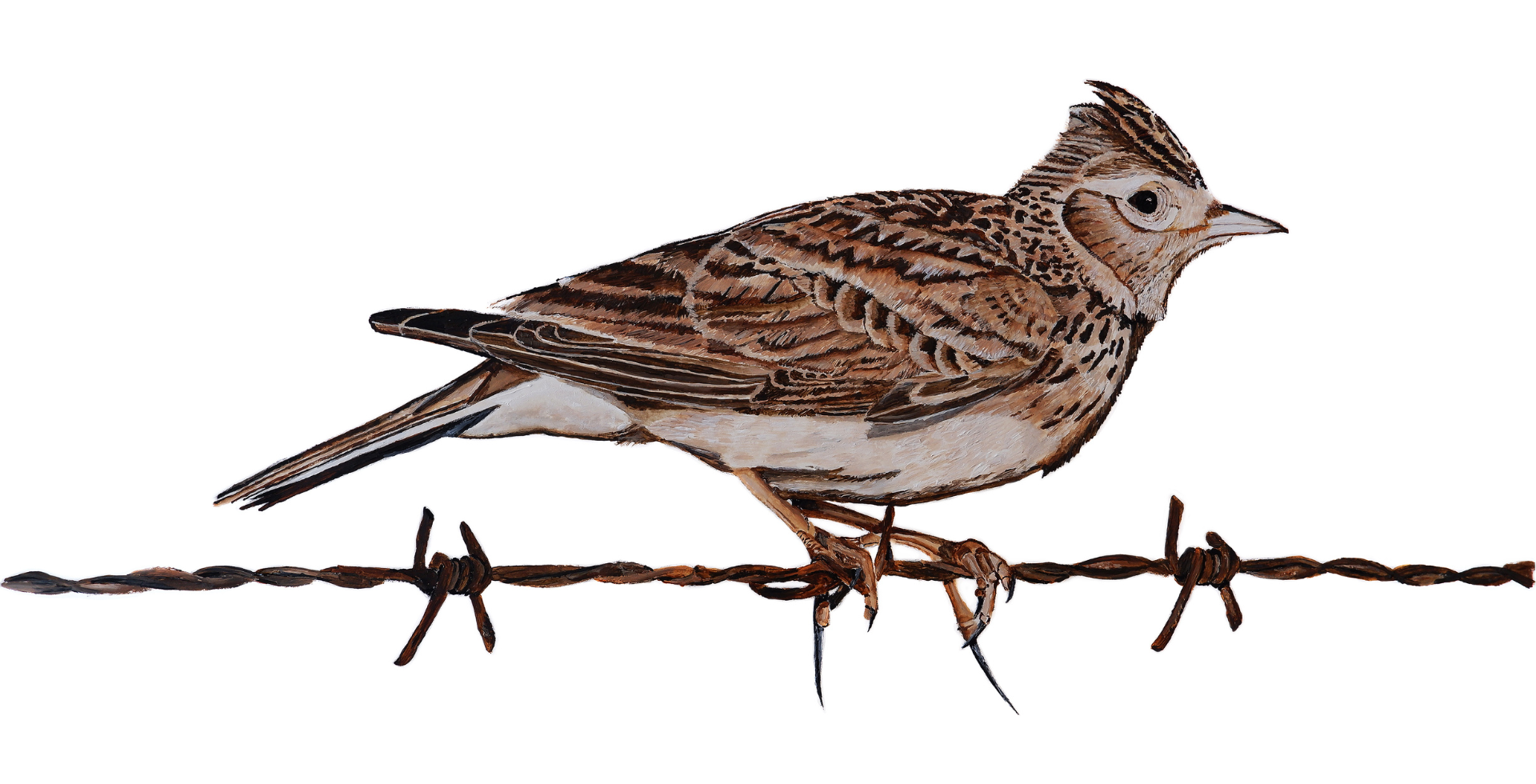
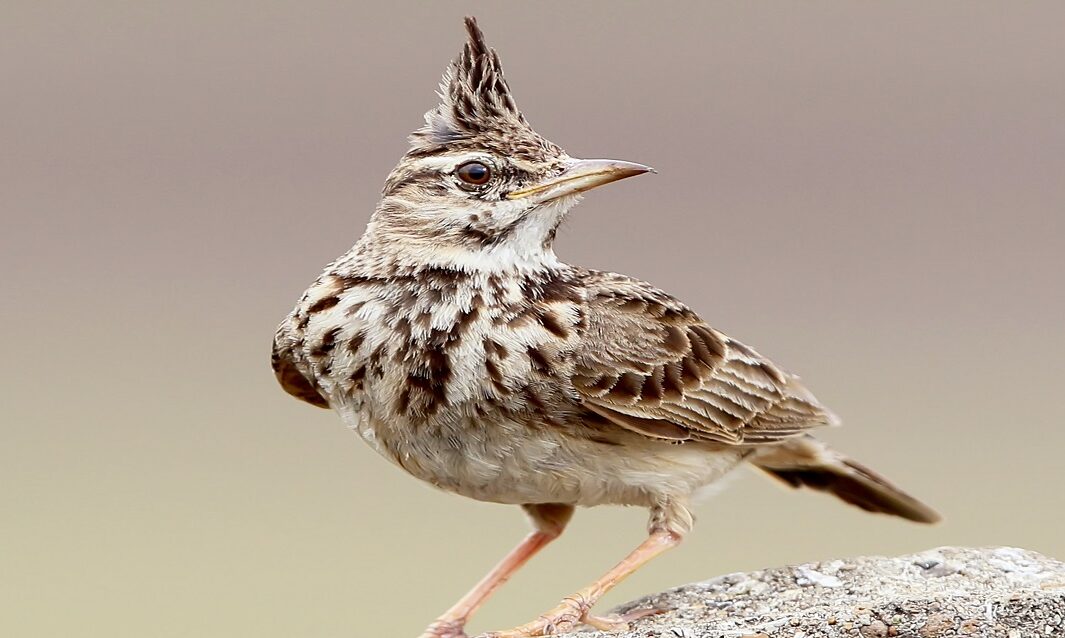
Skylark

What is aย Skylark?

The Skylark is a bird whose song is sometimes describedย as a โ€˜long,ย liquid warblingโ€™,ย isย one of the quintessentialย sounds ofย spring and earlyย summer.

The skylarkย spends much of its time on the groundย but will also perch on fence postsย and other low, openย perches.ย Its flight is characterisedย byย seeminglyย stiffย but very rapid wingbeatsย andย during its song flightย can rise quicklyย out-of-sightย above its territory.

Nesting season for these birds commences in April and will run until September.ย  Skylarks are ground-nesting birds and are easily disturbed by dogs during the nesting period.ย  To help support this bird to thrive on the site please keep dogs under close control, refrain from throwing balls in the grassland and stick to the main paths.


Why is the Skylark important to the Surrey Hills?

The condition ofย skylarkย habitatย and successful breedingย is threatened by:

  • The move away from spring-sown crops
  • Intensive grazingย of suitable nesting areas
  • Disturbance of nesting sites
  • Frequent grass cutting regimes


What habitat does the Skylark like?

Pasture

Permanent pastureย and rough grazingย (hills,ย heathย and moorland)ย accounts for about 58%ย of the total utilised agriculturalย area in Englandย of 17.36 million hectares. This rises toย nearlyย 65% ifย temporary grassland (under 5 years old)ย isย included.ย This figure will includeย specific grassland types such as chalk grassland, dry acid grasslandย and floodplain grazing marshย but the majorityย will be agriculturallyย improvedย pastures thatย support the livestock sector.

In common withย allย ground-nesting birds, it prefersย open,ย extensively managedย sitesย and will nest in grassland andย spring-sownย arable cropsย butย avoids hedgerows and any other cover that mightย help predators locate their nest.

What can be done to benefit the Skylark?

Goodย management andย habitatย creation opportunitiesย forย theย skylarkย  include:
  • well-managed hedgerows that are dense from top-to-bottomย and generally not more than 2m high
  • grass margins alongsideย hedgerows to provide a good source of insectsย and added cover when nesting
  • conservation headlandsย where the outside 6mย of a cereal crop is not treated with any herbicides or insecticides
  • provision of good seed sources such asย weedy stubblesย during the winter
  • creatingย areas of wild bird mixย including cereals for winter food
  • on all-grass farms, unsprayed and uncut margins can be left adjacent to hedgerows.


Creating and managing areas for the Skylark will help deliver the following benefits to communities:
  • Clean water
  • Clean air
  • Protection from and mitigation of environmental hazards
  • Mitigation of and adaptation to climate change
  • Thriving plants and wildlife
  • Beauty, heritage and engagement

These illustrations are by an artist taking part in a programme delivered by Watts Gallery Trust and funded by the Michael Varah Memorial Fund. This series of 30 Surrey Hills Indicator Species were commissioned by Surrey Hills Society and funded by Surrey Hills Trust Fund as part of the Making Space for Nature Exhibition.