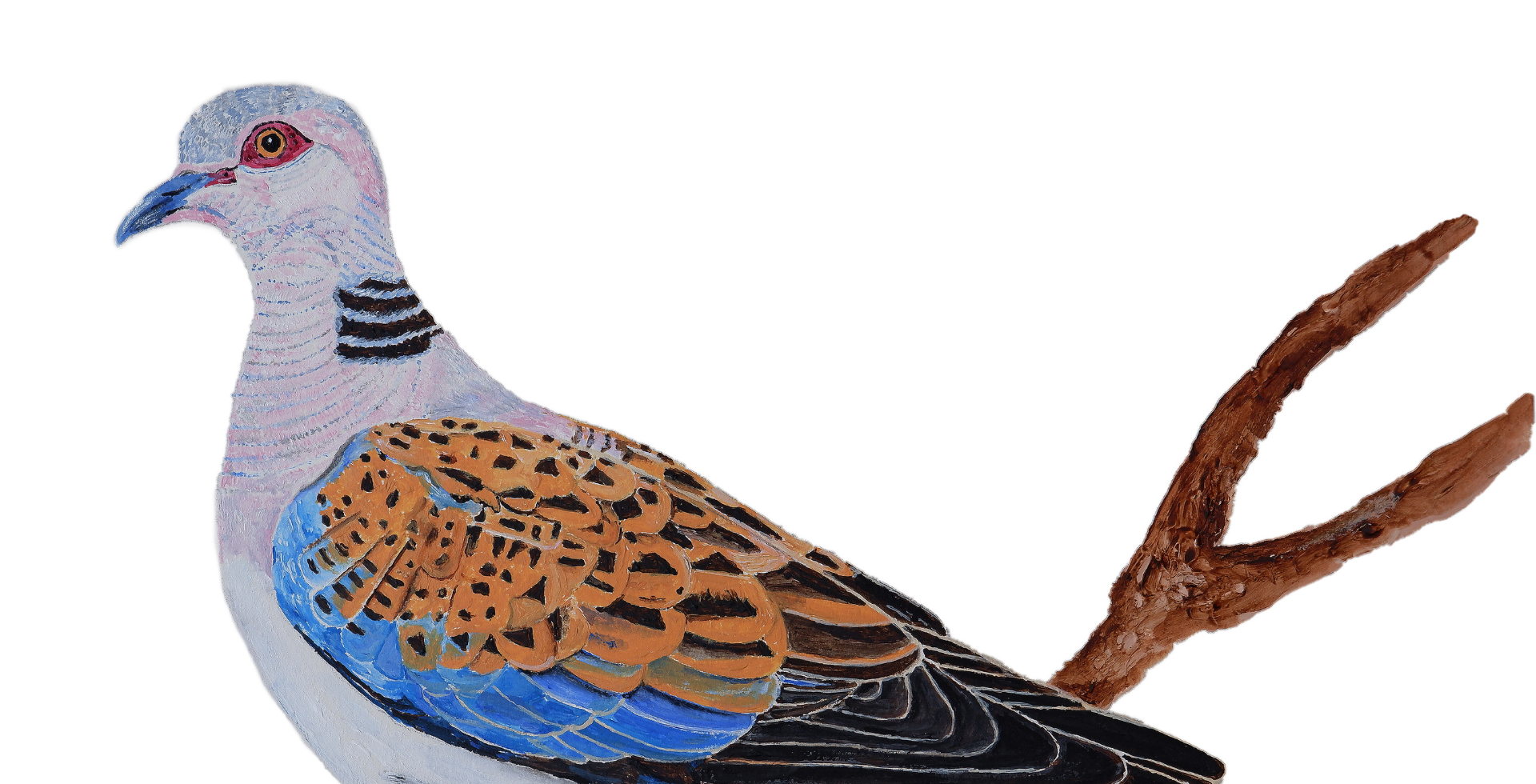
These illustrations are by an artist taking part in a programme delivered by Watts Gallery Trust and funded by the Michael Varah Memorial Fund. This series of 30 Surrey Hills Indicator Species were commissioned by Surrey Hills Society and funded by Surrey Hills Trust Fund as part of the Making Space for Nature Exhibition.
Turtle dove
What is theย Turtle dove?
The turtle doveย isย the UKโs fastest declining bird species and is on the brink of extinction.ย Itย is a small pigeon, smaller and darker than the collared dove and slightly larger than a blackbird. Its upperparts are distinctively mottled with chestnut and black and its black tail has a white edge.
Turtle doves are summer visitors to the UKย and theirย gentleย purring song is an evocative sound of summer.ย ย Theyย arriveย from sub-Saharan Africaย in late April and May to breedย in hedgerows, woodlandย edgesย andย open land with scattered bushes.ย Theyย feed on cerealsย and wildflower seeds.
Why is theย Turtle doveย important to the Surrey Hills?
The turtle dove isย a red-listed species, protected by the Wildlife and Countryside Actย (1981).ย It is a UK Priority Species for conservationย and isย restrictedย mainlyย toย southern and eastern England.ย UK numbers have declined byย 94% since 1995, causes of which include the intensification of agriculture leading to aย lack of seed and grain during the breeding season,ย as well as unsustainable levels of hunting on migration.
What habitat does theย Turtle doveย like?
Hedgerow
Hedgerows areย importantย bothย as landscape features andย as wildlife habitatย across lowlandย Britain, especially when associated with features such as grassy field margins.ย Classicย hedges areย linear,ย shrubby,ย mostly continuous features though hedges which have developed into lines of treesย retain landscapeย valueย and some wildlife value.ย Over 600 plant species, 1,500 insects, 65 birds and 20 mammals have been recorded at some time living or feeding in hedges and they are especially important for butterflies and moths, farmland birds, bats and dormice. Theyย alsoย play a crucial role in landscape connectivity, linking up other areas of habitat so that wildlife can move more freely across theย farmedย landscape.
The presence ofย turtle dovesย indicates a healthy hedgerow habitat.
What can be done to benefit the Turtle dove?
Good hedgerow management for the turtle doveย will create/result in tall hedges which provide nesting habitatย close toย good feeding habitat such as flower-rich field margins.ย This management willย benefit many other seed-eating species, including finches such as greenfinches, goldfinches andย yellowhammersย and small mammals such asย harvest mice.
Opportunities to create/improve/extend suitable habitat for this species include:
- Restoring overgrown/neglected hedgerows by hedge-laying or coppicing and planting up gaps
- Extending the hedge management cycle to allow hedges to grow taller and wider, and hedgerow fruits and berries to ripen
- Planting new hedgerows, includingย hawthorn orย blackthorn in the shrub species mix
- Encouragingย the growth of native climbersย in the hedgerows
- Planting hedgerow trees
- Floristically enhancing associated field marginsย and sowing nectar flowerย mixesย to increase seed provision
Creating and managing areas for the Turtle dove will help deliver the following benefits to communities:
- Clean water
- Clean air
- Protection from and mitigation of environmental hazards
- Mitigation of and adaptation to climate change
- Thriving plants and wildlife
- Beauty, heritage and engagement