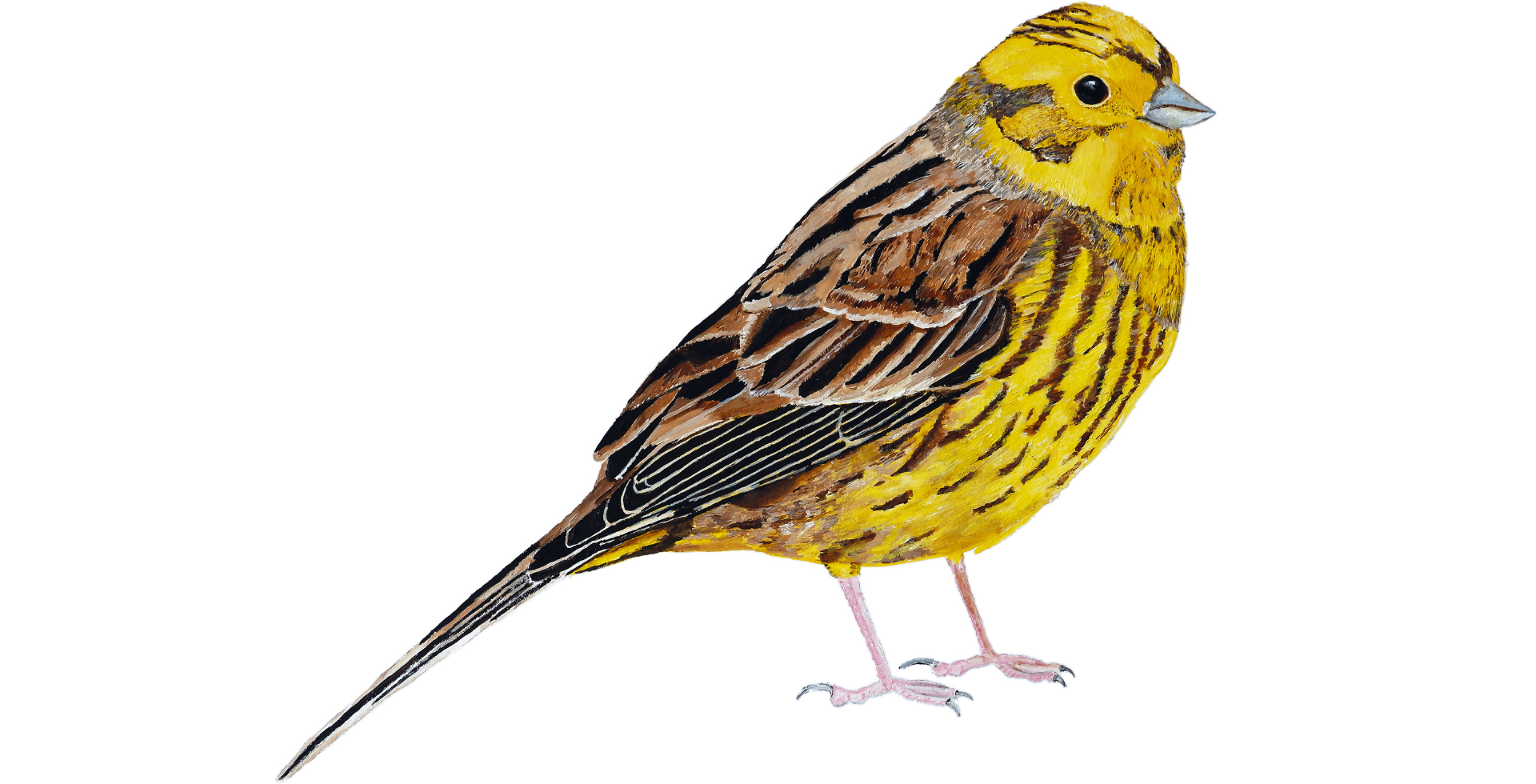

Yellowhammer

What is aย Yellowhammer?

Theย yellowhammerย is aย bird. The male is a highly visibleย member of the bunting family both in terms of itsย vivid yellow plumage and its habit ofย singing and calling from prominent perches,ย often along hedgerows.ย Its song is said to resemble the phraseย โ€˜a little bit of bread and no cheeseโ€™ย with 5-8ย short notes and the last being longer and slightly higher than the others.ย The femaleโ€™s plumageย tends to be more subdued and the maleย can also loseย itโ€™sย bold yellow colouring in the winter months.

Why is the Yellowhammer important to the Surrey Hills?

Its recent population decline make it a Red List species.

What habitat does the Yellowhammer like?

Arable

Arable is currentlyย isย one of the most intensively managedย land uses and covers a multitude of cropsย fromย the most basic commodity products such as wheat,ย oilseed rape, sugar beetย and potatoes toย moreย specialistย crops such asย linseed and asparagus.ย Some crops are annualย while others, particularly salad crops, canย yield two or three cropsย each yearย on the same piece of land.

What can be done to benefit the Yellowhammer?

Goodย management andย habitatย creation opportunitiesย forย theย yellowhammer would include:
  • well-managed hedgerows that are dense from top-to-bottomย and generally not more than 2m high
  • grass margins alongsideย hedgerows to provide a good source of insectsย and added cover when nesting
  • conservation headlandsย where the outside 6mย of a cereal crop is not treated with any herbicides or insecticides
  • provision of good seed sources such asย weedy stubblesย during the winter
  • creatingย areas of wild bird mixย including cereals for winter food
  • on all-grass farms, unsprayed and uncut margins can be left adjacent to hedgerows


Creating and managing areas for the Yellowhammer will help deliver the following benefits to communities:
  • Clean water
  • Clean air
  • Protection from and mitigation of environmental hazards
  • Mitigation of and adaptation to climate change
  • Thriving plants and wildlife
  • Beauty, heritage and engagement

These illustrations are by an artist taking part in a programme delivered by Watts Gallery Trust and funded by the Michael Varah Memorial Fund. This series of 30 Surrey Hills Indicator Species were commissioned by Surrey Hills Society and funded by Surrey Hills Trust Fund as part of the Making Space for Nature Exhibition.