Whether you are an avid bird watcher, hiker, horse rider, cyclist, or a lover of scenic views, National Landscapes are at the heart of creating a thriving place for nature and people.
2024 marks the 75th anniversary of the 1949 National Parks and Access to the Countryside Act which was the foundation for our Protected Landscapes. National Parks and National Landscapes can do so much to help us deal with the impacts of climate change and support nature recovery.
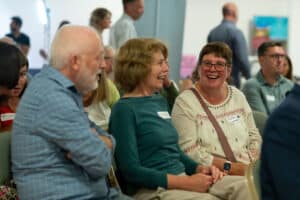
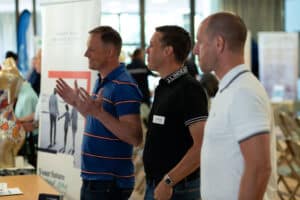
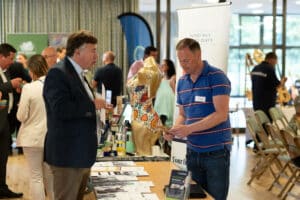
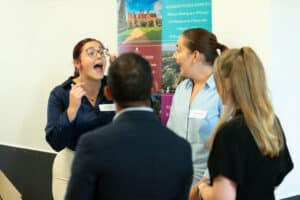
On Wednesday 24 April, the Surrey Hills National Landscape welcomed Julian Glover, Chair of The Landscapes Review, to Denbies Wine Estate to celebrate the Act and share his vision for Areas of Outstanding Natural Beauty as National Landscapes.
Julian Glover
“I’m so excited about the way our new National Landscapes are going to make England’s countryside greener, healthier, and happier for all of us. With the right backing they can do so much more for people and nature too so it’s uplifting to see Surrey’s National Landscape leading the way”
Julian launched the campaign ‘Postcards from the Future’, where the Surrey Hills Board needs you to share your thoughts on what a thriving National Landscape should be like in 75 years. This initiative aligns with long-term Surrey Hills projects such as tree and hedgerow planting, veteran tree safeguarding, heritage building conservation and heathland and downland restoration. This forward-looking vision will serve as a guide for the upcoming Surrey Hills Management Plan (2025 – 2030), shaping the policies that local authorities will adopt to conserve and enhance this remarkable landscape.
Kathy Atkinson, Chair of the Surrey Hills Board said.
“It’s sometimes hard to fathom what as individuals we can do in the face of global threats such as climate change, and nature depletion. Our Postcards from the Future campaign is a way for everyone who cares for the Surrey Hills to make a difference, by having a say in how this amazing landscape will evolve over the remainder of our lifetimes and beyond.
We want to distil the courage and ambition shown by those early countryside campaigners, and the politicians and legislators who agreed with them, and map out a collective vision for the Surrey Hills which recognises that this area will change over the coming decades, in ways that we cannot control as well as through careful stewardship. This land has been managed (and not managed) in a wide variety of ways over thousands of years. Generations have lived, worked, and farmed here; visitors from near and far have cherished the Surrey Hills for more than a century as a place to recharge and refresh during precious leisure time.
By thinking about ourselves in this rich history and looking ahead into a future that we want to help shape, your postcard from the year 2100 will help us map out a journey towards a landscape that will inevitably change, but not by accident or through a lack of vision. So please tell us what you think this landscape should look, smell, sound and feel like in another 75 years, given global and local trends. We want our plan to be ambitious and brave, because we all need a Surrey Hills that is healthy and resilient, for nature and for people.”
Submit your Postcard from the Future via the link below and become a part of shaping the next chapter for the Surrey Hills. Campaign closes on 31 July.
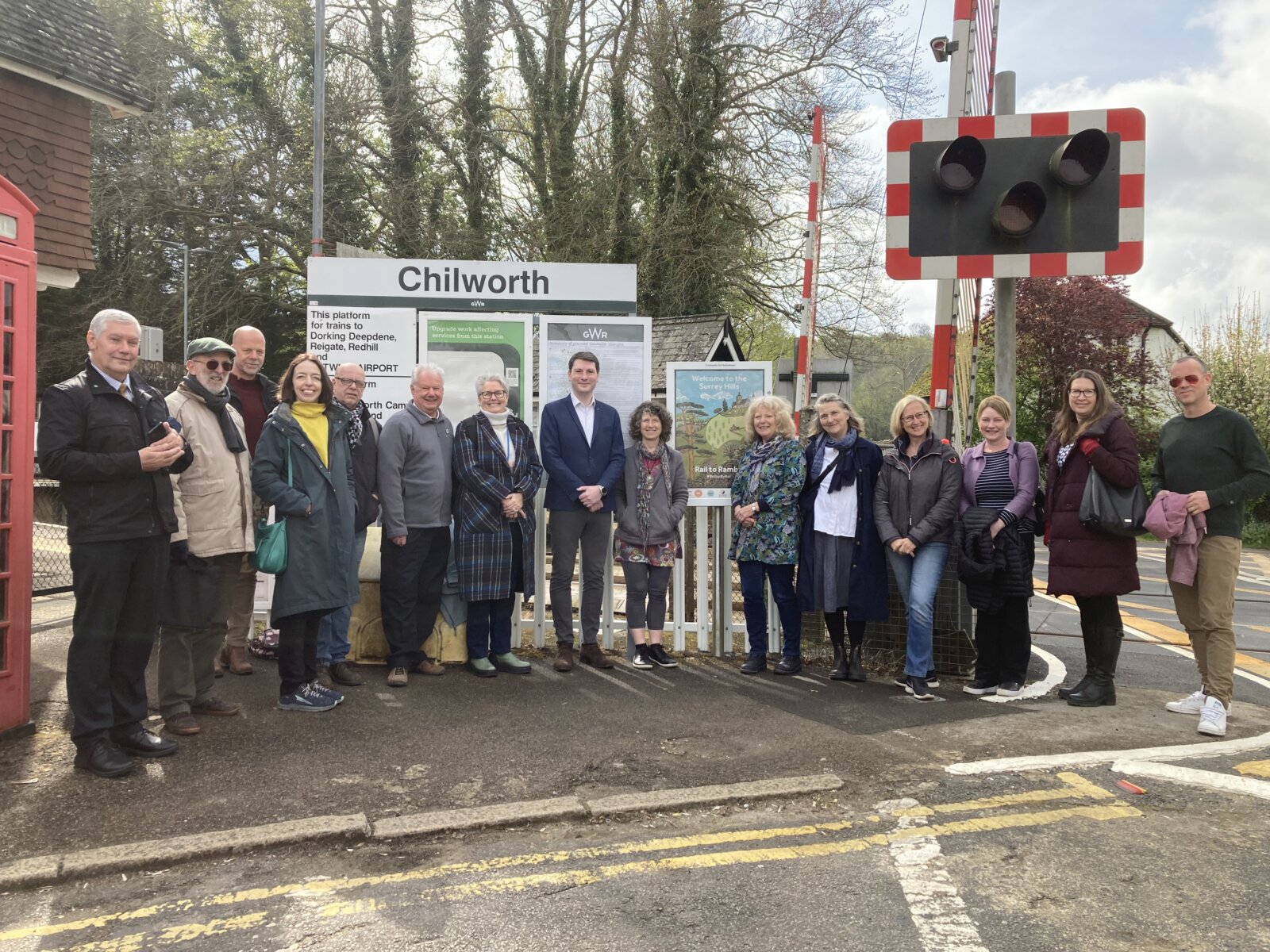
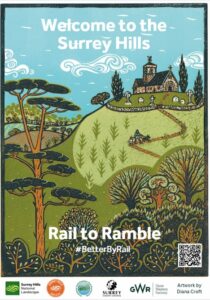
A campaign has been launched to encourage visitors to the Surrey Hills National Landscape to travel by rail. The ambition of Rail to Ramble is to create walking routes which give users the very best countryside experiences whilst leaving the car at home. This creates a greener and more accessible National Landscape for all visitors looking for connections to nature.
With thanks to funding from Great Western Railway’s Customer and Community Improvement Fund, the Southeast Communities Rail Partnership and Surrey Hills National Landscape commissioned local artist Diana Croft to create railway posters which champion sustainable travel along the North Downs Line. This railway line connecting Reading to London Gatwick Airport offers a beautiful train ride through the rolling Surrey Hills, with views of the chalk North Downs hillside, St Martha’s Hill and characterful towns and villages such as Shalford, Chilworth and Gomshall.
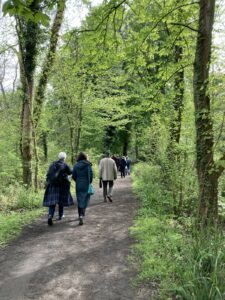
Following the poster launch, attendees experienced a delightful short walk to the nearby Gunpowder Mills, a cherished heritage site along the Shalford to Chilworth Rail to Ramble route. The event culminated at the charming Percy Arms, further underscoring the region’s rich local business offerings.
Eleanor Wills, GWR Regional Development Manager (East), said:
“The Customer and Community Improvement Fund is a fantastic opportunity for us to invest in projects that really make a difference to our customers and communities at a local level. These
posters provide a perfect guide to the wealth of amazing walking routes within easy reach of the North Downs Line.”
Katie Stewart, Executive Director for Environment, Infrastructure and Growth at Surrey County Council said:
“Surrey County Council celebrates the recognition of the pivotal role that sustainable travel has in preserving the landscape of the Surrey Hills. This project demonstrates the importance of working together to ensure that visitors by train have a warm welcome on viewing the beautiful new posters and then can enjoy a great experience visiting the outstanding countryside and supporting our local businesses on the well maintained and waymarked trails.”
During this year’s National Tree Week, the Surrey Hills National Landscape celebrated their woodland habitat from the ancient to newly planted trees. With over 40% woodland cover, the Surrey Hills is one the most wooded of all our National Parks and National Landscapes.
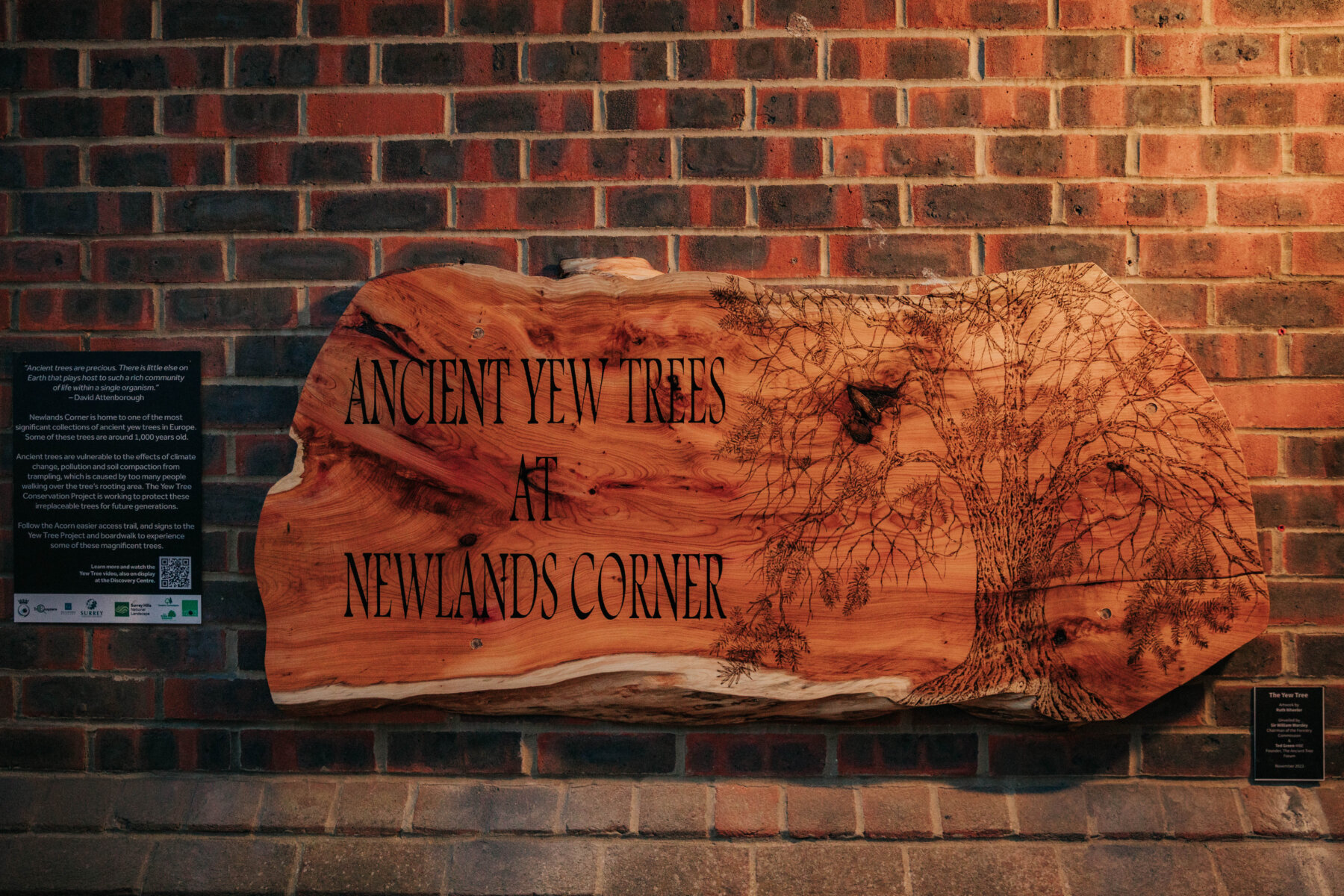
On Wednesday 29 November, Sir William Worsley, Chairman of the Forestry Commission and Ted Green MBE, founder of the Ancient Tree Forum, visited Newlands Corner to hear about the conservation project to safeguard one of the most important yew woodlands in the world and to unveil the Yew Tree artwork.
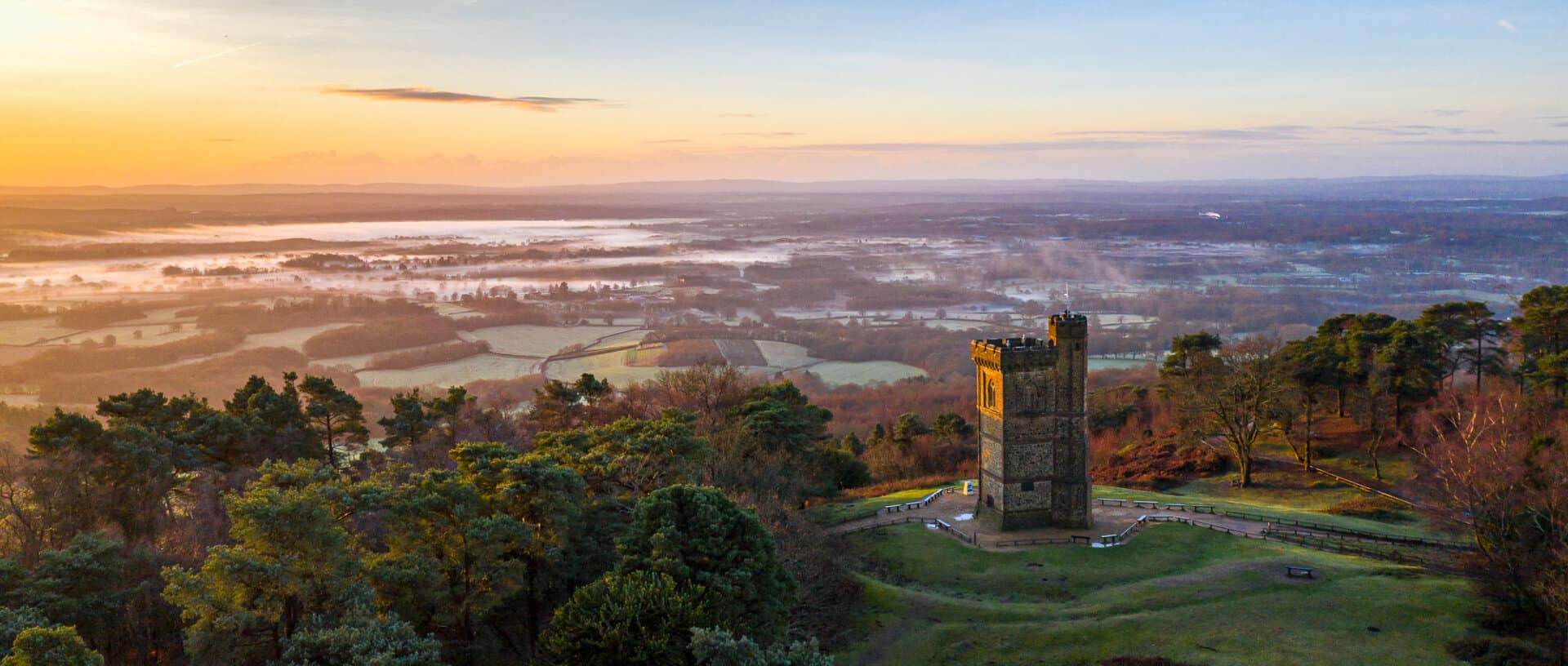
Ted Green MBE, founder of the Ancient Tree Forum and Sir William Worsley, Chairman of the Forestry Commission unveiling the Yew Tree artwork by Ruth Wheeler.Guests in front of the Newlands Corner view. (Left to right) Lydia, Mark & Sharna, Surrey Choices, Andy Wright, Conservation & Access, Lisa Creaye-Griffin, Surrey Nature Partnership, Matthew Woodcock, Forestry Commission, Gordon Jackson, Surrey Hills Society, Gary Evans, Forest Bathing Institute, Michael Baxter, Albury Estate, Geoff Monk, Treecosystems, Sir William Worsley, Forestry Commission, Anna, Yasmin, Nikki & Jonathan, Surrey Coalition of Disabled People, Rob Fairbanks, Surrey Hills National Landscape, Councillor Paul Deach, Surrey County Council, Bridget Biddell, Hampton Estate & CLA, Sarah & Oliver, Surrey Hills National Landscape, Ted Green MBE, Ancient Tree Forum, Tom Hill, National Trust, Heather Ackroyd, Ackroyd & HarveyGeoff Monk, founder of Treecosystems sharing some of the opportunities and threats to these ancient trees, and how his work with the help from Guildford Borough Council and Surrey Choices is creating a more sustainable future for these Yews, which are around 1,000 years old.Gary Evans, founder of the Forest Bathing Institute explaining the research behind spending time under the canopy of ancient trees and our mental wellbeing.
National Tree Week encourages everyone to enjoy and connect with the woodland and trees around them. With use of the Surrey Hills Access for All fund, Newlands Corner is just one of the many sites across the Surrey Hills which has seen accessibility improvements, connecting people with nature.
Cllr Paul Deach, Deputy Cabinet Member to the Leader of the Council said.
“It was wonderful to welcome Ted Green and Sir William to Newlands Corner to help raise public awareness of the work to conserve our precious ancient yew trees. Also, Surrey County Council are delighted to be working with the Surrey Hills team and the Surrey Coalition of Disabled People to enhance the opportunity to access nature for the health and well-being of all our residents, making sure that ‘no one’s left behind’.”
Chairman of the Surrey Coalition of Disabled People, Jonathan Fisher, and Vice-Chair, Anna Satori, experiencing the improvements made at Newlands Corner since their Access Reviews earlier in the year.
During the evening, the Surrey Hills Symposium welcomed hundreds of people to the University of Surrey, this year themed ‘Woodland Wonder, with thanks to sponsorship from Ringway. The Symposium brought together woodland advisors, community groups and Surrey Hills Enterprises members into a marketplace for guests to enjoy.
Sir William Worsley, Chairman of the Forestry Commission, Tim Wates, High Sherrif of Surrey and Professor Richard Murphy, Director for the Centre for Environment and Sustainability at the University of Surrey with sponsors Ringway and Surrey Hills Enterprises member, Silent Pool Gin.
The evening then continued in the auditorium, discussing the topic of the future of our trees in a changing climate.
Kathy Atkinson, Chair of the Surrey Hills National Landscape Board said.
“Celebrating our 5th Symposium hosted by the University of Surrey, this year highlighted how crucial our woodlands are as habitat for thousands of species, flood protection, air quality, cultural heritage, mental wellbeing and to securing our future in a changing climate. We are at a critical time for nature, and the recent rebranding of all AONBs to National Landscapes signifies the national importance of these areas in the fight for nature and in tackling climate change.” Read the full National Landscapes story here.
(Left to right) Kathy Atkinson, Chair of the Surrey Hills National Landscape Board, Sir William Worsley, Chairman of the Forestry Commission, Cora Pfarre, Head Forester at Maydencroft, Tom Hill, Tree and Woodland Advisor at the National Trust and Professor Richard Murphy, Director for the Centre for Environment and Sustainability at the University of Surrey
“We were delighted finish the week tree popping at the Hampton Estate to enable the chalk downland to thrive. The Surrey Hills team were joined by Surrey Hills Enterprises businesses, making space for nature for species such as the small blue butterfly. Surrey Hills Society are also out tree planting with fantastic volunteers this winter with support from the Surrey Hills Farming in Protected Landscapes fund.”
The Surrey Hills team with Surrey Hills Enterprises members including Shetland Pony Club and Surrey Hills and Rivers.
Today, [Wednesday 22 November] all designated Areas of Outstanding Natural Beauty (AONBs) in England and Wales are becoming National Landscapes, including the Surrey Hills National Landscape. The new name reflects their national importance; the vital contribution they make to protect the nation from the threats of climate change, nature depletion and the wellbeing crisis, whilst also creating greater understanding and awareness for the work that they do.
This is a significant milestone for the UK and the next step in fully realising the National Landscapes’ vision to be the leading exemplars of how thriving, diverse communities can work with and for nature in the UK: restoring ecosystems, providing food, storing carbon to mitigate the effects of climate change, safeguarding against drought and flooding, whilst also nurturing people’s health and wellbeing.
The Surrey Hills National Landscape was designated an Area of Outstanding Natural Beauty in 1958, the second to be designated in the country. It covers around a quarter of Surrey, the most wooded county in England, and is situated within the London Metropolitan Greenbelt with 1.5 million people living within 10km of the landscape. With rising national pressures regarding climate change, the biodiversity emergency the mental health crisis, the Surrey Hills as a National Landscape will better protect precious habitats such as heathland, downland and woodland which are home to important species, as well as providing space for people and nature to thrive.
Kathy Atkinson, Chair of the Surrey Hills National Landscape says:
“There’s often a healthy scepticism around talk of “re-branding” and people might reasonably ask, “What’s the point?” in calling the Surrey Hills a National Landscape instead of an ‘AONB’.
Firstly, the legal status of the Surrey Hills as an Area of Outstanding Natural Beauty is unchanged. This amazing area retains the same protections in law as a National Park. As set out by the Glover review in 2019, AONBs are fragmented, misunderstood and often see even greater pressures with less resource. Glover recommended not only a renaming of ‘AONBs’ to National Landscapes, but the power which could follow in terms of a strengthened network, with increased funding, governance reform, and new shared purposes to help us fight against the challenges our protected landscapes may face.
We need to use this rebrand as a step change to how we connect with our protected landscapes. To excite and engage the widest possible public in the task of protecting the Surrey Hills, a cherished landscape that is under threat like never before. This is a critical decade for our natural world, and National Landscapes brings the opportunity to collectively reduce the impact of substantial threats from a National and localised perspective. So, I urge everyone to embrace our National Landscapes vision as a tool to help us support a healthy and thriving landscape, for nature and for people.”
The UK Government’s proposal to allow the conversion of agricultural buildings to houses represents a significant threat to the beauty and rural economy of the Surrey Hills Area of Outstanding Natural Beauty (AONB), according to the Chair of the AONB Board. The Surrey Hills was designated in 1958 and, like every AONB in the country, has the same levels of protection as a National Park. It is a highly valued landscape appreciated by millions of people in Surrey, London and nationally.
The Government’s proposal to allow the extension of what are known as Permitted Development Rights, would give free rein for landowners to convert rural buildings into houses without having to go through the usual planning approval system. It could result in agricultural buildings, stables, rural workshops, farm shops, and tourist accommodation being converted into new housing whilst doing virtually nothing to meet affordable housing needs in the Surrey Hills.
Kathy Atkinson, Chair of the Surrey Hills Board comments.
“Planning decisions shape not only the physical character but also the nature and biodiversity of the Surrey Hills. We all agree that more affordable housing is needed right across the South East of England, but this latest proposal by the government is not the mechanism to deliver it. It also risks jeopardising the rural economy for businesses who rely on rural premises.
Everyone who lives and works in the Surrey Hills is familiar with the housing pressures here, and the sky-high costs of both housing and commercial premises. Turning agricultural buildings that may serve a whole range of functions into what are most likely to be exclusive, luxury homes, to be sold at price points way out of reach of most of Surrey’s residents, flies in the face of the whole purpose of designating the Surrey Hills as a nationally protected landscape.”
The potential impact of the proposed changes to Permitted Development Rights (PDR) was presented to the Surrey Hills Board AGM at Box Hill on 13th September, by the Surrey Hills Planning Officer, Clive Smith. Clive explained,
“It’s important to understand that there is not a ban on converting agricultural buildings, even now. Anyone wishing to convert their buildings into housing must go through the normal planning process. It is in the public interest that applications for conversions continue to be given the consideration they deserve, given the nationally protected status of the Surrey Hills. We are sympathetic to farmers and landowners who wish to convert their buildings, provided such conversions do not conflict with national and local planning policy.”
We encourage responses to the Government consultation by the deadline of 25th September 2023. The consultation link can be found here.
The full Surrey Hills submission can be found here.
The Surrey Hills Area of Outstanding Natural Beauty (AONB) welcomes the news that recovery of nature in England’s National Parks and AONBs is to be accelerated through a package of measures, including new legislation through the Levelling Up and Regeneration Bill.
Read Defra’s press release here and Thérèse Coffey’s full written statement here.
In the lead up to our Surrey Hills Wood Fair (9 & 10 Sept), Freewheelers and Surrey Coalition of Disabled People spent the day up in the tree canopy to experience nature from an entirely different view.
Jonathan, Chair of Surrey Coalition of Disabled People said
“The tranquillity within the canopy was so calming, the smooth transition from earth to treetops, has been shown to be accessible thanks to the care of your team. I’ve never tried a Zip Wire; I would love to try this sometime if ever possible. Thank you for a memorable experience.”
Suzan from the Surrey Coalition of Disabled People said
“I can most definitely say that as someone who has severe problems with heights, going up into the tree canopy was a fantastic experience which I would love to do again. I felt totally safe and thanks to looking towards the trees, didn’t realise how high we went up. It was so peaceful while up there and can thoroughly recommend to everyone.
I also enjoyed the screen printing and the lovely young lady who designed the screens made my choice of changing colour not an issue. I now have a beautiful and unique tote bag which will remind me of a wonderful day every time I see it.
I hope that this won’t be the once in a lifetime event but if it was, then what an experience!”
Surrey Coalition of Disabled People have been integral partners in helping us identify meaningful improvements to the countryside with the Access for All fund via access review visits. More information here.
Freewheelers will be performing a piece inspired by trees at this year’s WonderDusk event (16 Sept).
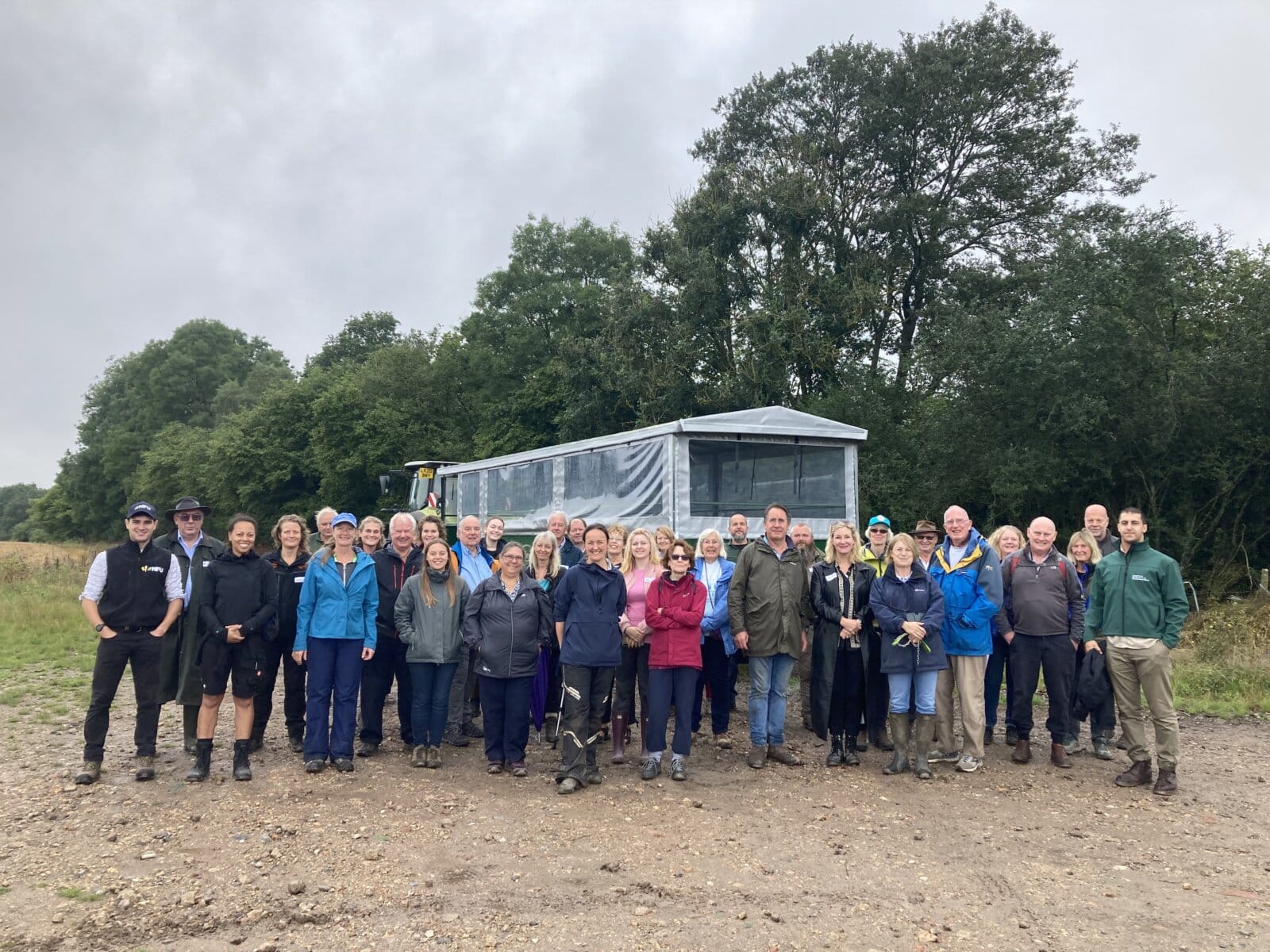
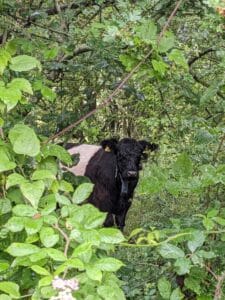
A huge thank you to Laurence and Paula at Manor Farm for hosting our Partnership Tour on Thursday 27 July. It was a fantastic opportunity for our partners to hear about the challenges and opportunities faced by farmers in the Surrey Hills. The day also included a visit to the 4km of hedgerow planted by volunteers and a herd of the Belted Galloway cattle wearing the no-fence collars for conservation grazing both funded through our Farming in Protected Landscapes programme.
On the 15th July 2023, the team at Just Bring Yourself took two groups of refugee families out for a hike into the fields, farm and woodland of Norbury Park. It was a day of smiles we will not forget – and that’s despite the “amber” warning weather which tried to bat us down from start to finish.
Funding to cover our core costs and get the project moving was provided by the Nineveh Trust. The all-important transport was provided by Epsom College who were eager to help these families living in the Epsom area. We found ourselves in the full gamut of heavy rain, wind, sunshine and drizzle throughout the day. Surrey County Council’s Norbury Park provided a beautiful back drop of meadows, mixed woodland (which our guests referred to as jungle during the day) and a meandering river course. Our volunteer guides, Don and Anton, shared snippets of knowledge about nature as we walked on together.
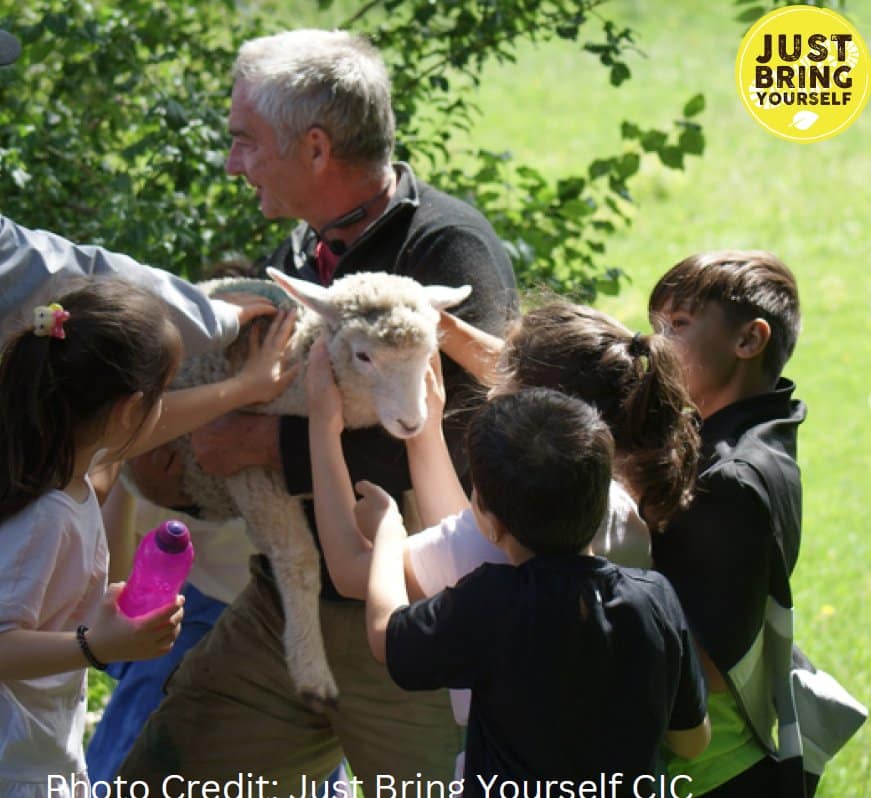
The highlight of the tour, as is always the case, was Swanworth farm and made possible through the Surrey Hills Farming in Protected Landscapes fund. Swanworth is a place where children and animals connect, and this time Larry the Lamb was the star that made children smile from ear to ear. It is always heart warming to see the delight on someone’s face when they interact positively with animals. The families had lots of questions to ask farmer Nick Bullen, as the comparison of farming cultures was a hot topic, including why we don’t just buy a cow for home use from the local farm (well there’s a thought!).
Our rather worse for wear gazebo was having none of the weather, so we looked around for a place of cover from the rain where we could sit for our picnic. We then offered everyone the chance of writing or drawing something about their day and Francesca and I spent some time sitting with the children who asked how to spell various words to express what they had seen or enjoyed at Norbury. Some expressions were made in their own language which we hope to share soon as the calligraphy is quite beautiful. After a reflection period, we played games in the Swanworth fields which allowed them to run through buttercups and grasses. We then asked everyone to help clear up which enforced the Countryside Code that we teach during each tour and they were all brilliant and totally willing. The long walk home through paths laden with incoming blackberries, wild flowers, birds and farm animals was filled with conversation and questions from our guests.
The lovely drivers from Epsom College were there to meet us for the journey home. These were the first of five events we are holding for refugees this summer. A lot of work and co-operation goes into days like these, but our team came away feeling moved and enriched by the happiness and enthusiasm of the children, the day was made especially so thinking about the unimaginable experiences that forced them from their homes.
A big thank you to our participants and everyone who made these tours possible, including the team at The Epsom & Ewell Refugee Network part of The Good Company Charity who provide so much support for families in need. A special thank you goes to the weather that displayed all four seasons in one day and that all of our participants gloriously embraced.
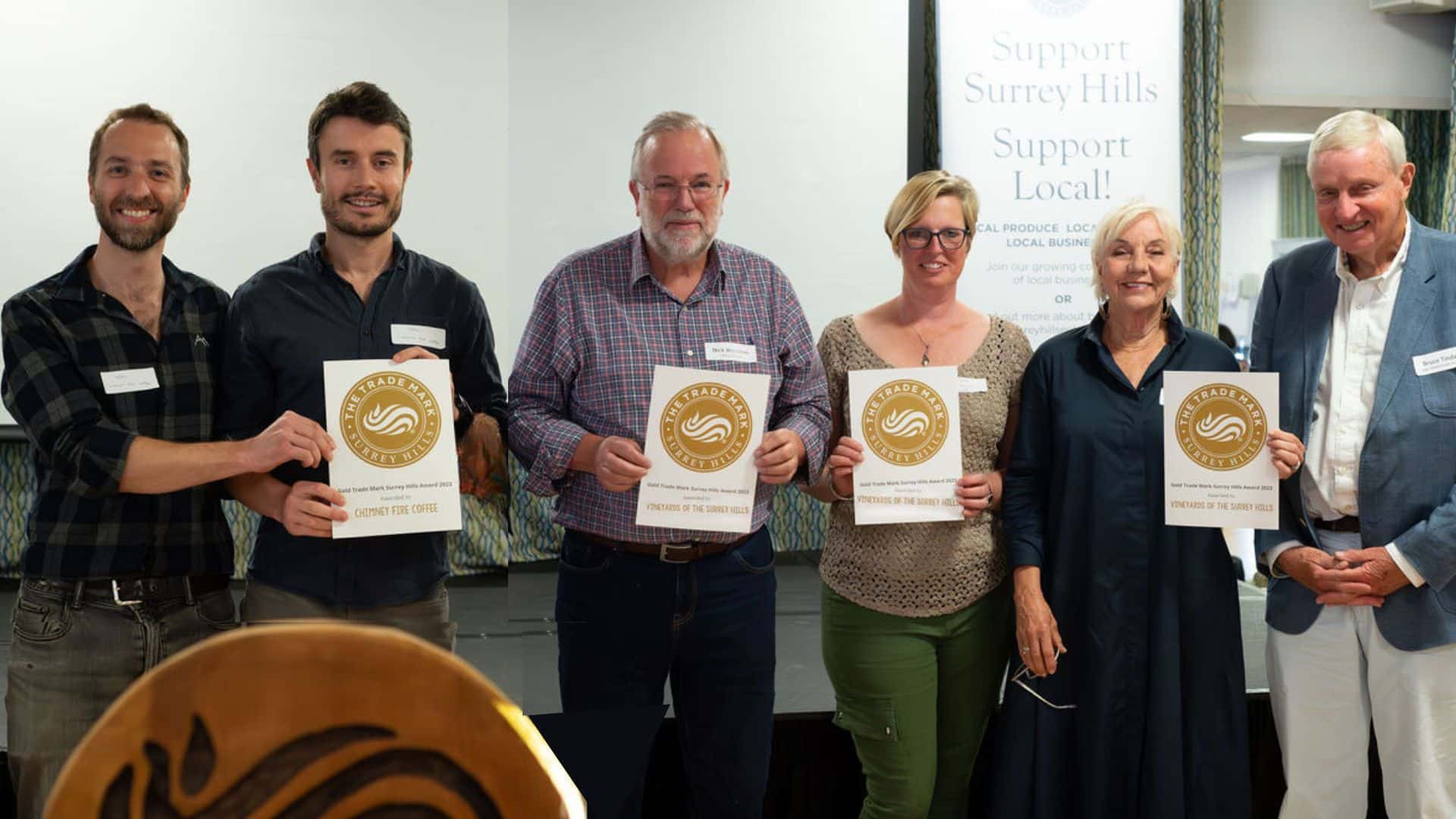
Vineyards of the Surrey Hills and Chimney Fire Coffee have been named as 2023 recipients of the Gold Trade Mark Award by Surrey Hills Enterprises. The coveted Gold Award is bestowed upon those Surrey Hills Enterprises members that have made a significant impact in relation to environmental sustainability, the inspiration they provide to others and their work to connect with the local community and other members.
Surrey Hills Enterprises is a Community Interest Company that works with local businesses to support the rural economy and promote, protect and enhance the Surrey Hills Area of Outstanding Natural Beauty (AONB), whilst acting as a local support network for those independent Surrey Hills businesses.
The Gold Trade Mark Awards 2023 were announced at the Surrey Hills Enterprises Annual Celebration last night (18 July) at Leatherhead Leisure Centre, an event that saw local business members gather to network and share ideas, whilst celebrating the huge number and range of outstanding small and independent businesses in the Surrey Hills focused on quality, local provenance and sustainability.
The evening provided an informal and collaborative platform for Surrey Hills businesses to meet, with delicious dishes created from local produce devised especially for the event and served by Surrey Hills Enterprises member and creative corporate and private caterer, Lavender Catering. Sparkling wine from the Surrey Hills were also served, as members chatted, learning more about each other’s businesses and potential opportunities to work together.
Presented by Simon Whalley, Chairman of Surrey Hills Enterprises, Vineyards of the Surrey Hills were chosen as worthy winners of this year’s Gold Trade Mark Award, announced as a highlight of the event, in recognition of the exemplary collaboration between the five vineyards (Greyfriars Vineyard, Chilworth Manor, Albury Organic Vineyard, High Clandon and Denbies Wine Estate), the level of environmental sustainability, support for and connection with the Surrey Hills and the range of experiences and activities offered to members of the public.
Chimney Fire Coffee were awarded the special Gold Trade Mark to honour the high level of environmental sustainability as a core part of their business, including achieving B Corp accreditation, the level of support and collaboration with Surrey Hills members and the range of experiences offered to members of the public from their new location within Denbies Wine Estate in Dorking.
Speaking on behalf of Surrey Hills Enterprises, Simon Whalley congratulated the two winners:
“The Gold Trade Mark Award recognises local quality, environmental excellence and support for the Surrey Hills and other local businesses and it is obvious that this year’s recipients truly exemplify this. We fully congratulate Vineyards of the Surrey Hills and Chimney Fire Coffee on this achievement and wish them every success for the future.”
Heathland Connections Nature Recovery Project, covering 16,000 hectares, will create wildlife-rich habitats, improve climate security, and offer opportunities for the local communities
Project part of six nature recovery projects launched, backed by £7.4 million funding, to support government target to halt and then reverse the decline in nature
Rare Natterjack toads set to be first species to benefit, along with habitats that are home to rare, bird, reptile, dragonfly and plant species
An area bigger than the size of Hertfordshire is to be dedicated to fast tracking nature recovery, as six new landscape-scale nature recovery projects are launched by Natural England and the government.
The Heathlands Connections in Surrey is one of the six Nature Recovery Projects supported by £7.4 million funding from Defra and Natural England. It is a new, ambitious project working with partners to enhance, restore and connect the special habitats found in the western most section of the Surrey Hills Area of Outstanding Natural Beauty (AONB) landscape.
This project will connect designated sites, such as Thursley, Hankley and Frensham Commons SPA, with surrounding heathlands, owned by partners who are keen to work more closely together. Collectively, the project will find innovative solutions to management challenges such as habitat degradation, disturbance to ground nesting birds, and the emerging threat of more frequent and more devastating wildfires.
The Surrey Hills Area of Outstanding Natural Beauty (AONB) currently sees approximately 30 million visitors annually due to its proximity to London and other significant urban areas. This project will produce and deliver a ‘gold standard’ sustainable recreation plan to encourage those visiting the landscape to use active travel, improve access and therefore create a better connection to nature.
Funded by Natural England and led by the Heathland Connections partnership, the project aims to restore natural processes and make the landscape more resilient. These unique habitats are hotspots for important, and rare, bird, reptile, dragonfly and plant species and are an iconic landscape for the local community to enjoy.
Allison Potts, Thames Solent Area Manager, Natural England said:
“We’re really excited to launch our Nature Recovery Project here across the iconic heathland of West Surrey, a rare and important landscape and habitat.
“This project is all about connections. It’s connecting the heathlands together, so they have a more certain future. It also connects the landscape with the people that live or visit here; connecting partners that work here to achieve a bigger impact together and connecting in the exciting, new ways to fund biodiversity and green infrastructure improvements. Doing so will help us achieve ambitious nature recovery progress in a place that matters for people and wildlife.”
Matt Cusack, Lead Ranger, Natural Trust said:
“Heathlands are home to some of our most precious plants and wildlife, and we need to do everything we can to not only protect them but give them the best chance of recovering. We’re excited to be working alongside these partners to help achieve that.”
Rob Fairbanks, Director, Surrey Hills National Landscape said:
“Heathland Connections will help us really engage with the local community and visitors on the importance of thriving with nature. The better connected they feel to the landscape and the nature with in it, the better chance we have to safeguard and enhance it for generations to come.”
The project will empower local communities, generating long-term sustainable funding opportunities while providing sustainable recreation that improves peoples’ health and wellbeing as well as their understanding and appreciation of this unique landscape.
The six multi-partnership collaborative projects covering 176,000 hectares of land across England – from the Tees Estuary to the South Downs – will create improved and better-connected habitats for wildlife and improve public access to nature. The projects will strengthen the national Nature Recovery Network and showcase delivering nature recovery at scale.
All the projects, announced today (20 July), will help to manage flooding and wildfire risks, improve carbon stores and build diverse habitats for wildlife such as the endangered wart biter cricket and the elusive twite.
Notes:
Partners in the Heathland Connections project include National Trust, The Surrey Hills board, Surrey County Council, Waverley Borough Council, Surrey Wildlife Trust, RSPB, MOD, Forestry England and Amphibian and Reptile Conservation Trust (ARC).
The Nature Recovery Projects will make a major contribution to the Nature Recovery Network and help deliver on the commitments set out in the government’s Environmental Improvement Plan to halt the decline in nature and support thriving plants and wildlife.
This announcement builds on the G7 legacy project in Cornwall and the five Nature Recovery Projects launched in 2022 which are improving and connecting wildlife rich sites and restoring degraded areas for nature across the West Midlands, the Peak District, Somerset, Norfolk and Cambridge. The new projects extend this landmark commitment across the country to include uplands, coastal and marine areas, and will demonstrate how blended public and private finance can support the Nature Recovery Network. The funding will support the twelve projects across the three-year period of the comprehensive spending review.
Improving and connecting existing strongholds for wildlife, creating new habitats and investing in collaborative action for nature at scale will help achieve our pledge to protect 30% of our land and sea for nature by 2030, and create a sustainable future for people and the planet.
Other projects across England include:
East of Eden, Cumbria – Based in the upland regions of Cumbria, this project stretches over 100,000ha from fertile farmland of the eastern Eden Valley to the western slopes of the North Pennines and the moorlands above. The project will support land managers to create habitats for species such as the curlew, black grouse and the Teesdale Violet. Natural flood management techniques will reduce flood risk and improve the absorption of carbon by rewetting peat.
The Lost Wetlands, Cheshire to Lancashire – Extending over 5,000ha the project will reclaim, restore and rewet a mosaic of wetland habitats in South Greater Manchester and North Cheshire, previously lost to historic industrialisation, urbanisation and agricultural intensification of the landscape. A network of wetland habitats will be restored to improve connectivity for wildlife, creating habitats where dragonflies, Great Crested Newts and Water Voles can thrive. The project will also engage young people and communities, providing greater connection to the wetlands on their doorstep and opportunities to celebrate the natural heritage of the area. This work will help support the government’s commitment to bring people closer to nature, with everyone living no more than 15 minutes from a green space.
Tees Estuary Recovering Nature, Northumbria – Covering over 11,000ha, the TERN Project will work with partners to improve, create and restore coastal, estuarine and land-based habitats. Steeped in industrial history, this area is home to a well-loved colony of Common Seals and assemblages of roosting waders and wildfowl including the little tern, wintering knot, ringed plover and redshank. Action will create bigger and better connected habitats that increase climate resilience and offer a sustainable future for these cherished species. New footpath links will also bring the community closer to nature, strengthening Teesside’s vision as a place for people and nature.
Bradford and South Pennines, Yorkshire and North Lincolnshire – Spanning 30,000ha, this partnership will restore and enhance the condition of the upland peat landscapes in the South Pennines, restoring habitats for moorland birds such as the endangered twite. Natural Flood Management techniques will benefit communities at risk of flooding in the Calder Valley with the creation of intertwining mosaics of wetland habitats. Green corridors will also be created, linking upland sites to the urban environment and industrial heartlands and allowing wildlife to move freely. The project will work closely with community groups, and the NHS, providing opportunities to connect the people of Bradford and West Yorkshire with nature on their doorstep. Working with Bradford City of Culture 2025, the project will encourage sustainable access to nature and highlight the environmental links between the industrial heartlands of West Yorkshire and the moors which define them.
Seaford to Eastbourne, Sussex and Kent – Traversing 12,000 ha of the iconic land and seascape of the South Downs, the project builds on key partnerships with South East Water, local authorities, farmers and fishers. The project will build on research into chalk aquifers in the area which confirms the importance of using healthy chalk grass and chalk heath habitats to deliver clean and plentiful water. The work to integrate habitat and natural flood management schemes will create clean water supplies for nearby towns and benefit species, such as the rare Wart-biter Cricket. Ambitions further extend out to sea where the project partners will seek to boost Short Snouted Seahorse populations found near Beachy Head. The project is also researching how NHS staff who work in complex mental health can be trained in nature-based interventions, supporting the communities within Seaford to Eastbourne.
More than 5,000 farmers and land managers have now benefited from the Farming in Protected Landscapes (FiPL) programme, new figures have shown.
The programme, now in its third year, offers funding to farmers across AONBs and National Parks. Support for nature recovery and climate resilient businesses, heritage conservation and better access for people to enjoy our protected landscapes all feature in programme delivery. To date, £25 million has been allocated, and more than 2,400 projects have been approved for funding.
The new report – Farming in Protected Landscapes programme: Year 2 update – showcases projects across National Parks and Areas of Outstanding Natural Beauty (AONBs) which have benefited from the Defra funding. Examples include The Pollinator Project in North Wessex Downs AONB – a group of 20 farmers collaborating to improve the landscape for key pollinators and invertebrates; and Dalefoot Farm in the Yorkshire Dales, an area which includes SSSI designation, supporting nature recovery through the establishment of a network of hedgerows, riparian strips and trees that connect the existing ancient semi-natural woodland.
Neil Heseltine, NPE Chair and Chair of the Yorkshire Dales National Park Authority, said: “Our work across protected landscapes to help farmers and land owners engage with the FiPL programme shows how important partnership working and collaboration are to driving forward sustainable land management initiatives. As a farmer myself, I have seen the nature and biodiversity crisis that the country faces grows more acute. Whilst farming is often seen as one source of this crisis, it is only through harnessing farmers as partners in aspiration, that we will overcome it. The challenge is to inspire and reward farmers for delivering positive benefits for nature whilst running profitable businesses. It is therefore essential that the Government commit to embedding the principles of FiPL within the environmental land management offer beyond 2024.”
Tom Munro, Dorset AONB Manager and NAAONB Agriculture & Land Use Panel spokesperson added: “The huge successes of FIPL over the last two years has demonstrated how AONB teams are uniquely placed to facilitate on-farm projects to deliver for nature, climate, people and place across these treasured landscapes. While our pre-existing networks with farmers and advisers helped us hit the ground running, FIPL has helped us cement these relationships and to be regarded as trusted delivery bodies. These landscapes have been shaped by thousands of years of farming and it’s only by working like this at scale with farmers that we will adequately respond to the climate and ecological emergency while ensuring rural communities thrive underpinned by sustainable farm businesses.”
The report was launched today at a meeting of the All Party Parliamentary Group (APPG) for National Parks. Attendees heard from representatives from across protected landscapes and farming community about the importance of sustainability and land management to the future of these special places, and how farmers and other land managers play a vital role in shaping the landscapes they operate within to enhance the natural and cultural heritage, improve productivity, and create more vibrant, sustainable communities.
Surrey Hills case study- Hampton Estate – The King’s Pond
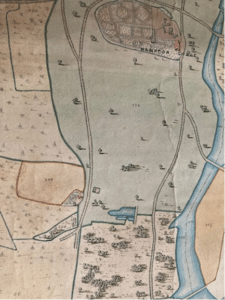
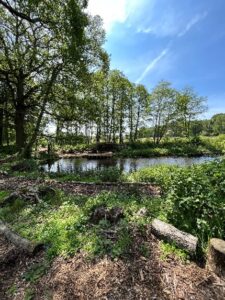
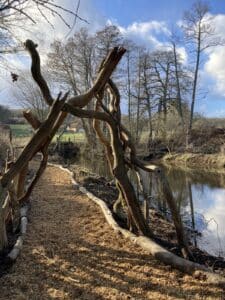
The Hampton Estate is 2,250 acres of historic parkland, grazing meadows, arable fields, woodlands and traditional farmyards. The funding of £12,624 was used to transform a silted-up and inaccessible pond into a feature of significant ecological and educational value. The historic old dairy pond, shown on maps at least as far back as c.1700, is located adjacent to the converted dairy farm which is now used as a hub for a variety of farm walks, school visits and open days the Estate hosts each year. These visits consist of groups of varying ability who visit the farm to learn about the countryside, agriculture and the environment. Now renamed The King’s Pond to honour the Coronation of King Charles III, the project has created:
New wheelchair access, pathways and a platform to enable visitors to enjoy pond dipping and nature study.
Ground works and planting to enhance existing and create new habitats to optimise the pond’s ecological function.
Educational resources to help visitors to the pond maximise their engagement and learning from the pond.
Find out more about Surrey Hills FiPL projects here and view the full report here.
—
Notes
Key cumulative figures from the FiPL programme since it began:
More than 2,400 projects have been approved for funding so far
The number of farmers engaged in the programme has exceeded 5,000
Programme funding for farmers and land managers to date is more than £25 million
The programme has created 42 new farm clusters and helped support 106existing ones
Funding has supported 485 Projects to reduce flood risk
The number of volunteers engaged through the programme is over 5,000
Over 100 miles (approximately 190 km) of new hedgerow have been planted
8 miles (approximately 13 km) of dry-stone walling have been restored
Farming in Protected Landscapes (FiPL): FiPL is a funding programme from Defra which funds projects in protected Landscapes which reflect at least one of the four themes: nature, climate, people and place. It is for one-off projects and is now in its third year.
Environmental Land Management scheme (ELMs): ELMs is part of the Government’s Agricultural Transition plan. Defra are expanding their schemes to pay farmers and land managers to provide environmental goods and services alongside food production; and are providing one-off grants to support farm productivity, innovation, research and development.
There are 46 Areas of Outstanding Natural Beauty Areas of Outstanding Natural Beauty (AONBs) across England (34), Wales (4) and Northern Ireland (8). They are protected by the nation for everyone. They are places where landform, climate, species, industry, heritage, culture and language come together to create something unique and distinctive, shaped by generations and waves of people. Some of the nation’s most iconic views are in AONBs: from the tin mines of Cornwall AONB to the silhouette of Bamburgh Castle in Northumberland Coast AONB, Willy Lott’s farm in Dedham Vale AONB (the subject of Constable’s Haywain) to the stark uplands of North Pennines AONB. AONBs are the nation’s nearby countryside – 66% of England’s population lives within a half hour journey time of their nearest AONB. AONB’s are the nation’s landscapes.
The National Association for Areas of Outstanding Natural Beauty is a charity that provides a strong collective voice for the UK’s AONB Network. Its objectives are to promote the conservation and enhancement of AONBs, advance the education, understanding and appreciation by the public of AONBs.
National Parks England (NPE) brings together English National Park Authorities to provide a strong, collective and expert voice at a national level. We shape policy by drawing on our extensive experience, facilitating discussion, sharing knowledge, cultivating partnerships, and testing innovative solutions to some of the biggest challenges facing society.